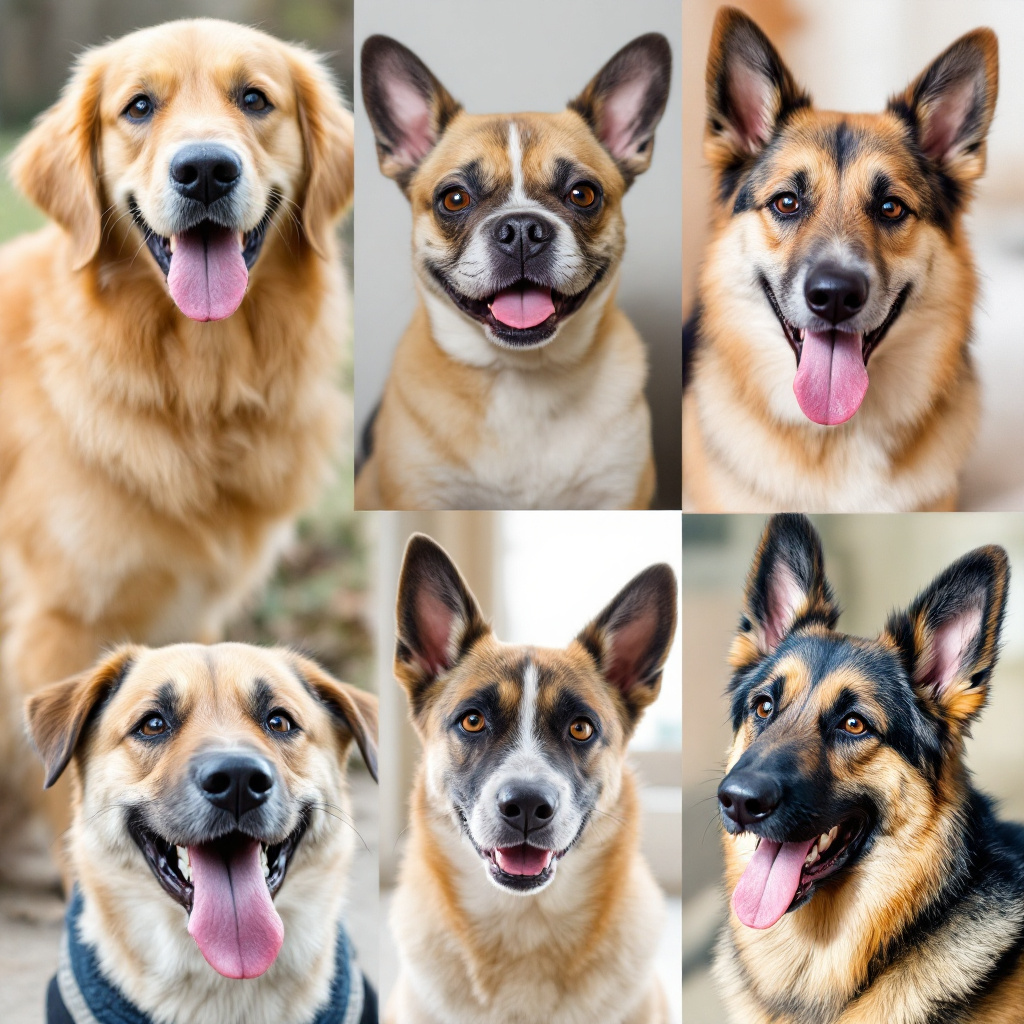

Breed-dependent dog tax: history and controversies
For many dog owners, their four-legged companion is much more than just a pet. But who would have thought that humans and dogs are not treated equally when it comes to tax? Welcome to the curious world of breed-dependent dog tax, a topic that is as hotly debated as a fresh cup of coffee in the morning.
The beginnings of dog tax: a historical overview
The history of the Dog tax goes back a long way and reflects the changing relationship between humans and animals. Originally introduced to regulate the number of dogs and promote public health, the dog tax quickly established itself as a fixed source of income for local authorities. But why is it breed-based? There are some very interesting details at play.

Which breeds are affected by the dog tax?
The breed-dependent dog tax mainly affects so-called ‚list dogs‘ or ‚dangerous breeds‘. However, which dogs are on this list varies considerably from city to city. Here is a brief overview of which dog breeds are frequently affected:
- American Staffordshire Terrier
- Rottweiler
- Pitbull Terrier
- Staffordshire Bull Terrier
- Bull Terrier
Interestingly, these lists differ not only in Germany, but also worldwide. This naturally raises the question: Why are some dog breeds categorised as more dangerous than others? And how is this justified?
The logic (or lack thereof) behind the fee increases
The idea behind the breed-based dog tax is simple - or at least it seems that way. Municipalities argue that certain dog breeds are potentially more dangerous, which entails higher costs for public safety and order. But does this really seem to be the case?
Studies have shown that a dog's behaviour depends as much on its upbringing and environment as on its breed. On closer inspection, it's hard to ignore the fact that these rules often seem generalised and can be unfair. There are numerous examples of ‚fighting cuddlers‘ who wouldn't harm a hair on anyone's head and yet are still taxed a hefty amount.
Controversies and legal challenges
Controversies - that's the right point. The breed-dependent dog tax has caused a lot of controversy in society and in court. Many dog owners and animal welfare organisations have been fighting against these special regulations for years. But what are the arguments?
- Unjustified stigmatisation: Critics argue that dog breeds are unfairly stigmatised and thus disproportionately punished.
- Financial burden: High taxes could deter potential dog owners, which could lead to the surrender of beloved pets or the decision not to adopt.
- Lack of scientific basis: Many scientific studies indicate that the behaviour of dogs is not breed-specific, but individual.
The legal challenges are also interesting. Many affected dog owners have challenged the regulations in court, with mixed success. The debate is therefore far from over.
Breed-dependent dog tax in international comparison
How do our neighbours actually do it? It is not only in Germany that dog tax is calculated differently from breed to breed, but also in many other countries. In Great Britain, for example, there is no such taxation at all. There, the Dangerous Dogs Act is the legal framework for keeping dog breeds under control.
In Australia, on the other hand, some breeds are not even allowed to be imported or bred. So, regionally different like a good curry - according to taste and demand.
For whom is it worth taking a closer look at the dog tax?
Anyone who thinks this only affects dog owners of ‚list dogs‘ is mistaken. The breed-dependent dog tax could one day affect anyone who is thinking of adopting a dog. It is therefore worthwhile for potential dog owners to take a close look at the local regulations and the associated costs. Because as we all know, even small decisions can have a big financial impact.
Conclusion: A sensitive topic that makes you think
The breed-dependent dog tax is more than just a financial issue. It raises important questions about justice, science and the coexistence of humans and animals. The debate is likely to continue for years to come and it will be interesting to see how the regulations develop in the future.
Of course, in the end, the hope remains that all dear furry friends will be treated fairly - regardless of their breed. Who knows? Maybe one day we will write another chapter in the history of dog tax, one that is characterised by progress and understanding.
Frequently asked questions about the breed-dependent dog tax
Does the dog tax depend on the breed?
In Germany, every dog owner is obliged to pay the respective amount of dog tax. It can happen that certain dog breeds pay more than others. However, this depends on whether your dog is categorised as dangerous, for example.
Which dogs do not have to pay dog tax?
Dogs that are used exclusively and necessarily for the protection and assistance of blind, deaf or otherwise helpless persons are exempt from dog tax. Dog owners who take in a dog from an animal shelter, animal sanctuary or similar animal welfare organisation can also be exempt from the tax for up to five calendar years in most municipalities.
Why is the dog tax more expensive for the second dog?
In many municipalities, you pay more for the second dog than for the first. The reason for this is that dog tax is traditionally regarded as a luxury tax in Europe. With the amount of the tax, the local authority wants to ensure that the number of dogs does not increase too much.
Are there any legal objections to the breed-based dog tax?
Yes, there are numerous legal challenges and debates about the breed-based dog tax. Many dog owners and organisations argue that this practice is discriminatory and has no scientific basis, as a dog's behaviour is not solely dependent on its breed. These regulations have already been challenged in court several times.
How can you avoid the dog tax?
By law, there are no legitimate ways of avoiding the dog tax. However, owners of guide dogs or dogs from animal welfare organisations can be exempt from the tax under certain conditions. It is advisable to always check and follow the local regulations.