Your cat's body language: understanding and interpreting emotions
Cats are fascinating creatures full of secrets and mysteries. If you've ever had the feeling that your cat has a hidden language, you're not far wrong. Their body language is the key to deciphering their emotional moods. In this article, we'll delve deep into the mysterious world of cat language and give you the tools to better understand your cat's body language and respond to their needs.
Your cat's body language: the tail as a barometer
Your cat's tail is an excellent indicator of its emotional life. You could even say it's the barometer of their soul. But what exactly does your cat's tail say? Here are some typical tail movements and postures and what they mean:
- Tail raised high: A sign of friendliness and self-confidence. Your cat is happy and pleased to see you.
- Curved tail: Almost like a question mark, the curved tail shows curiosity and a willingness to interact.
- Twitching tail: Ouch, your cat could be irritated or stressed. Better check the situation slowly!
- Tail wrapped around the legs: Expression of affection and claim to ownership - you belong to their world!
- Drooping or hidden tail: Often an indicator of insecurity or fear.
The magic of the ears: Silent signals
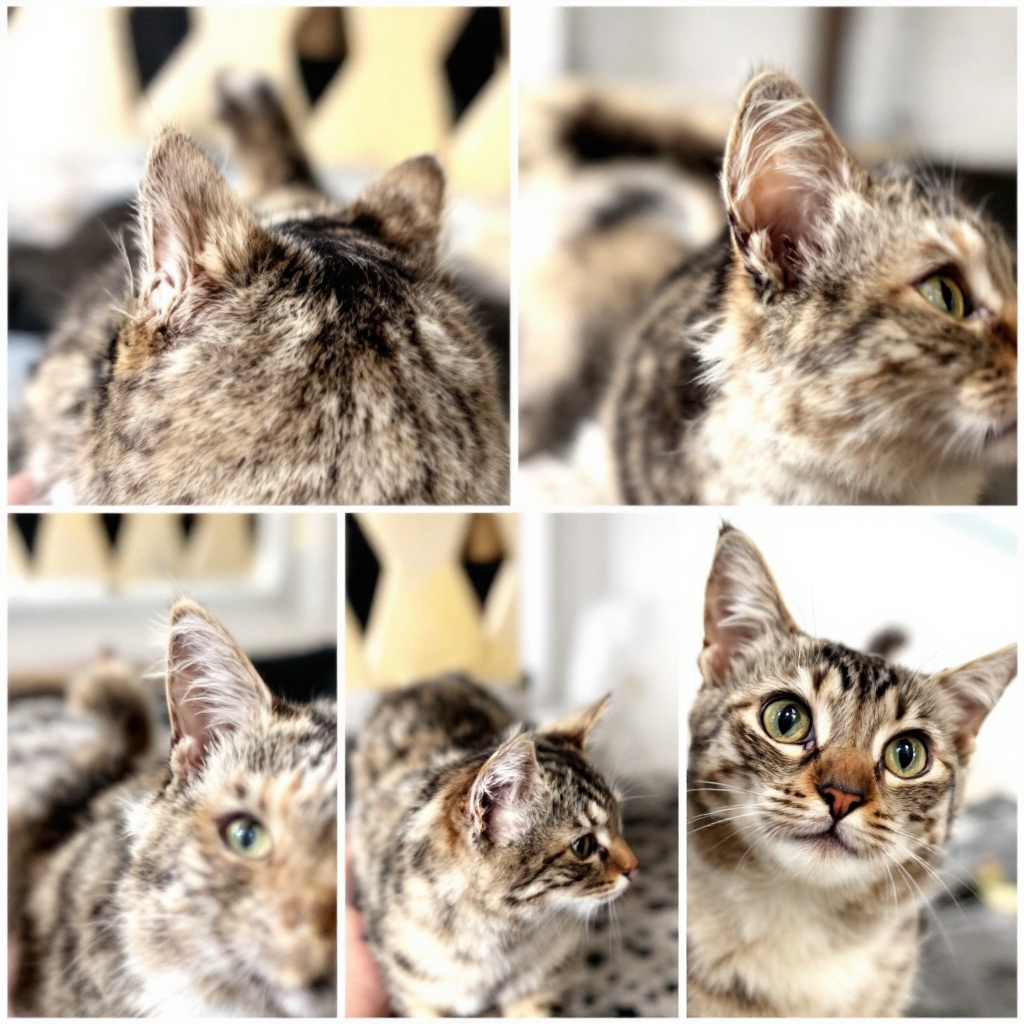
Ears are not just for hearing! They are incredibly expressive and can help you recognise your cat's individual mood.
- Upright ears: Your cat is attentive and possibly interested in its surroundings.
- Ears turned to the side: The so-called „aeroplane ears“ mean that she feels uncomfortable or threatened.
- Ears laid back or flat: A clear signal for fear or aggression. Caution is advised here!
Eyes, the windows to the soul
It is said that the eyes are the mirror of the soul - this also applies to cats. Pay attention to the following eye movements and positions:
- Slow blinking: Your cat trusts you and shows you her deepest respect - give her a slow blink back as a compliment!
- Eyes wide open: This can signal curiosity or alertness. Context is important here!
- Constricted pupils: Normal in bright light, but often a sign of focus or area of interest at dusk.
Posture: Stories without words
Your cat's general demeanour says a lot. It tells you stories of relaxation, attention or even fear.
- Tense body with lowered head: Comfort is different! Your cat may be anxious or defensive.
- Lying stretched out on the back: Pure trust! Your cat will feel safe and comfortable here.
- Posed fur, „the Halloween cat look“: Extremely stressful situation - caution is advised here!
Influences on behaviour: More than just body language
While your cat's body language gives you direct access to their emotions, there are always external factors that can influence their behaviour. Changes in the household, new animals or people and even a visit to the vet can affect body language.
Always keep an eye on the overall context, as observing more than one signal often gives a more complete picture. A gesture or posture is often complemented by an acoustic companion such as a grunt or growl, which provide further clues to the cat's mood.
Unravelling the secret of cat language
Ultimately, it is important to consider your cat's body language as individual. Every cat has its own idiosyncrasies and favourite expressions. The more time you spend with your furry friend, the more refined your understanding of their non-verbal communication will become.
Always ask yourself what is really behind your cat's body language: Is she happy, or is there perhaps something else behind it? Unlocking these secrets will not only improve your relationship, but also allow you to respond quickly to their needs, whether it's during stressful moments or cuddly snuggle time.
Curious to better understand your cat's body language and deepen your relationship even more? Then pay attention to the signals in future - they are the key to a unique friendship!
FAQs about your cat's body language
How does a cat show affection?
If the furry friend rubs its head against you or milks your body, the cat is showing that it likes and loves you. These affectionate gestures are clear signs of trust and affection.
Why does the cat lift its bum when stroked?
When your cat lifts its bum when you stroke it, this is comparable to a friendly „hello“. The scents on the anal glands are particularly intense and by stretching out its rear end, the cat wants you to recognise it. It is an instinctive means of communication.
How does a cat show joy?
A cat shows its happiness in various ways. For example, it purrs loudly, rubs against people or objects, wags its tail and generally shows relaxed and contented body language. These signs indicate that your cat is happy and content in its environment.
Can I always interpret my cat's body language correctly?
It is not always easy to interpret a cat's body language correctly. Cats are individual creatures with their own likes and dislikes. Practice and careful observation are the key to correctly understanding the more subtle signals.
What should I do if my cat often seems anxious?
If your cat often seems anxious, it is important to find out the cause. Changes in the home, loud noises or other stress factors could be the reason. Try to provide your cat with a quiet and safe place and consult a vet or animal behaviourist if necessary.