
Moody training methods: The key to successful dog training
Dogs are amazingly versatile creatures that can not only become our best friends, but also loyal companions in everyday life and in challenging situations. But before your four-legged friend can listen to commands confidently and act safely in any situation, basic training and command knowledge must be on the agenda. In this exciting article, we look at the Atmospheric training methods - an innovative approach that focuses on your dog's emotional state. These methods not only promote a deep connection, but also optimise your dog's responsiveness and obedience.
Why atmospheric training methods?
Let's face it - every living creature learns best when it's fun, and dogs are no exception. Conventional training methods tend to be one-sided and neglect the emotional state of the dog. Atmospheric training methods on the other hand, take your dog's moods and behaviour into account and thus create a positive and appealing learning environment. But what makes these methods so effective?
- Motivation instead of coercion: In contrast to restrictive methods, mood-based methods encourage the dog to learn through positive reinforcement.
- Mediation through connection: They deepen the bond between you and your dog by being based on trust and understanding.
- Long-term results: Dogs that are trained with their mood in mind remember better and respond more reliably to commands.
How the state of mind influences learning
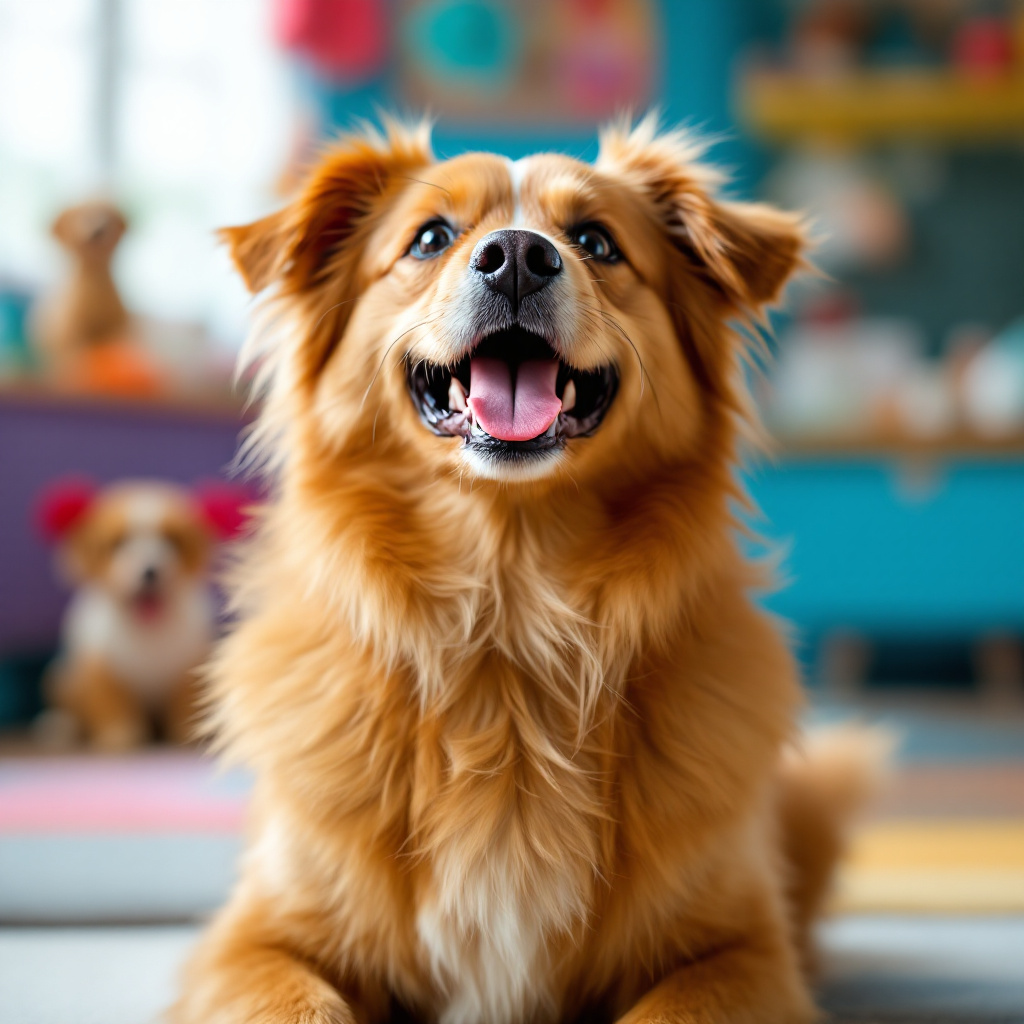
It is fascinating how similar humans and dogs are in their emotional perception. A dog that is stressed or anxious will be less willing and able to learn new behaviour. Stress can impair memory and make learning new commands more difficult. On the other hand, a dog that feels comfortable and secure will be more willing to learn.
Pay attention to your dog's body language - ears, tail and eyes often say more than barking or growling. Pay attention to how your dog reacts to your approach and adapt your training methods accordingly.
Practical implementation: atmospheric training methods in everyday life
Now that you know why mood makes learning easier for your dog, let's take a look at how you can apply these methods in practice.
1. choose the right moment
Similar to a person whose concentration is at its lowest when they are tired or distracted, your dog's training should also take place at a time when they are receptive and relaxed. Start with short training sessions that end with a sense of achievement to avoid frustration.
2. positive reinforcement
Reward your dog for good behaviour with treats, cuddles or games. This will encourage him to repeat the desired behaviour. Don't forget to keep your voice and body language positive - dogs are amazingly good at recognising our emotions!
3. understand the language of dogs
Take the time to recognise and read your dog's body language. Dogs often communicate more subtly than we think. Joy, fear or tension can be easily recognised through close observation and thus taken into account in training.
The use of fun and games in training
Play and fun are powerful tools in motivational dog training. Dogs that learn with enthusiasm and eagerness remember the commands they are taught for longer. Alternate between different activities, taking into account your dog's age, fitness and interests.
- Varied activities: Keep your dog busy in a variety of ways - whether it's playing fetch in the park or learning new tricks in the living room.
- Short units: Keep the training sessions short and concise so as not to overtax your dog's attention.
- Interactive toys: Use toys and puzzles that encourage natural instincts and intelligence.
Challenges on the road to success
Yes, there are also hurdles in the training process. Some days are marked by frustration, whether due to external disruptions or seemingly unyielding behaviour. But the key lies in perseverance and adaptability:
- Patience is a virtue: Not every dog learns at the same speed. Vary the methods depending on your dog's reaction behaviour and never give up.
- Stay flexible: If something is not working, you can change the approach. Try to organise the training methods intuitively and creatively.
Closing thoughts: The path to harmony
Training a dog is not just about giving commands and encouraging obedience. Rather, it is a journey that requires dedication, patience and a keen sense of your four-legged friend's mood. Harness the power of Atmospheric training methods, to achieve a deeper bond with your dog and maximise his learning ability.
A contented and attentive dog who feels understood will most likely not only master basic commands, but will also reward you handsomely with his love and loyalty. Immerse yourself in the world of moody education and discover the radical change in your interaction with your furry friend!
FAQs
Q: What are mood training methods?
A: Mood training methods are training approaches that take into account a dog's emotional state and behaviour. These methods promote a positive and engaging learning experience that improves willingness to learn and retention of commands.
Q: Why is it important to consider mood in dog training?
A: Your dog's mood can significantly affect his ability to learn and respond. A stress-free and happy dog is more attentive and responds better to training instructions, which ultimately leads to more effective results.
Q: How can I improve my dog's mood during training?
A: Use positive reinforcement by giving your dog rewards in the form of treats, toys or praise for correct behaviour. Make sure that the training takes place in a calm environment and at times when your dog is relaxed.
Q: What mistakes should I avoid when using atmospheric training methods?
A: Avoid getting impatient or frustrated during training. Dogs can sense these emotions, which makes learning more difficult. Adapt the training methods to the individual dog and proceed step by step to avoid confusion and stress.
Q: Can I use mood training methods with any dog?
A: Yes, mood training methods are suitable for all dogs - regardless of breed, age or temperament. As these methods can be customised, they offer great potential for long-term success in dog training.