
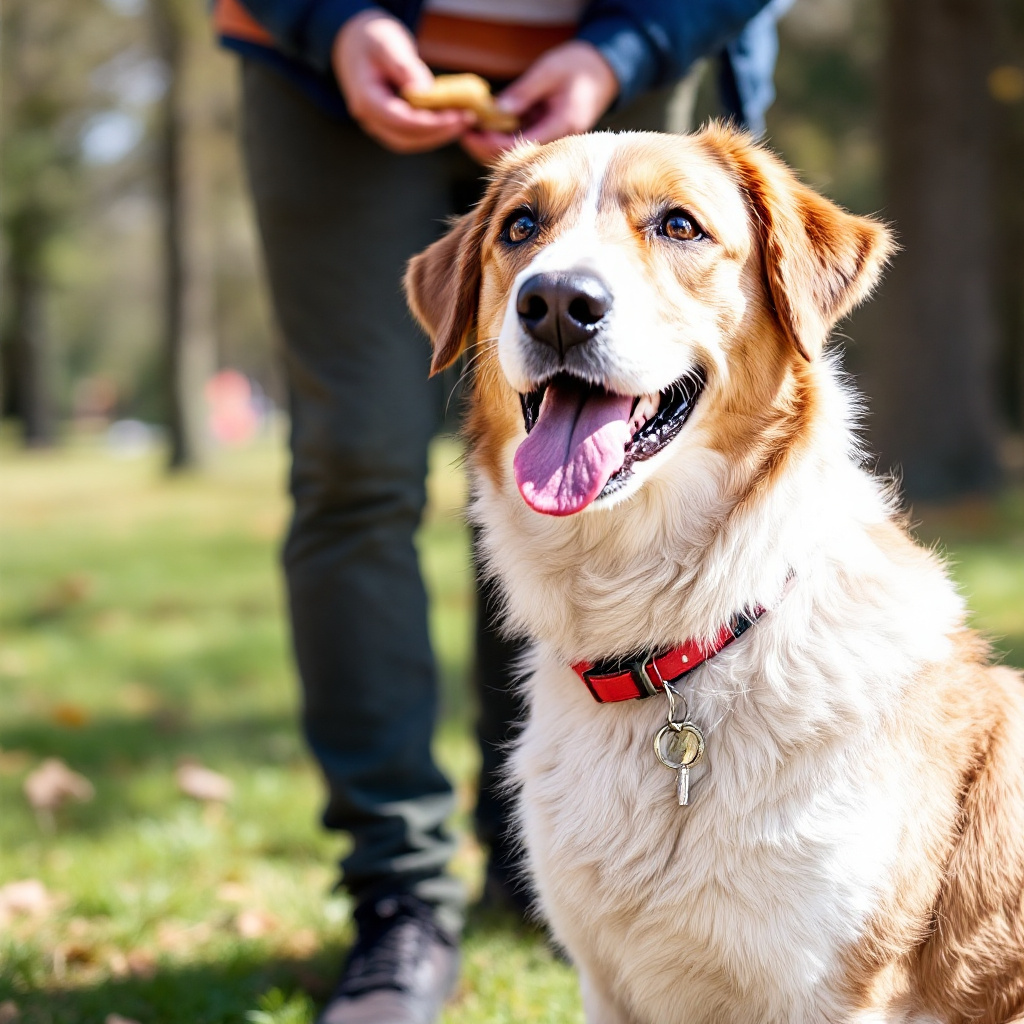
Basic commands for dogs: the key to a harmonious relationship
In the fascinating world of dog training, the question often arises: Which basic commands should my four-legged friend absolutely master? Whether you are a new dog owner or an experienced professional, the importance of basic commands for dogs cannot be overemphasised. They are the foundation on which safe and effective communication between you and your dog is built. So, get ready, let's dive into the world of commands that will have your dog's tail wagging with joy!
Why basic commands are so important for dogs
Before we look at the specific commands, it is advisable to understand why they are so essential. Basic commands not only provide safety for your furry companion, but also for other people and animals you may encounter. Imagine your dog is walking off the lead in a meadow and suddenly sees a rabbit. A well-placed Command can stop him from sprinting off. Not only is it safe for him, but it also calms your heart, doesn't it?
- Safety: Protects your dog from danger.
- Communication: Strengthens the bond between you and your dog.
- Social behaviour: Better interaction with other dogs and people.
The must-have commands for every dog
Here are the most important basic commands for dogs that your loyal furry friend should definitely have in their repertoire:
Seat
Ah, sit - the classic command! If you can get your dog to rest on two shoulder blades, you have already taken one of the first important steps. It's like the please in the dog world and helps to teach your dog to stay still in exciting situations. Remember: patience is the key, because not every dog understands the first time.
Place
This command is particularly useful if you want to create a relaxed environment. Sit signals your dog to lie flat on the floor. Remember to start training in quiet places and slowly move to busier environments to gradually introduce distractions.
Here
Here - a call that will bring your best friend back, no matter how mesmerised he is by the treetop. For many dogs, retrieving in busy areas can be a challenge. But with rewards and positive reinforcement, this command becomes a breeze!
Stay
This command is like a safety belt for your dog. If your dog can learn to stay in stay mode, you can teach him to react according to the situation instead of acting impulsively. Start in small steps and gradually increase the distance and duration.
Foot
The heel command lets your dog walk elegantly at your side. Whether you're walking through a crowded park or exploring a shopping street, this command keeps your dog close to you. Make sure you practise it regularly to establish the frame in quiet moments.
From
The pack rat command Off is essential if your dog has something unauthorised in his mouth. Remember to be patient and don't scare him. Swap the unwanted item for something positive and continue the training in a fun way.
Atmospheric training methods - make learning a pleasure
Now that you know the basic commands, it's time to focus on training methods that are fun and effective for both you and your dog. Here are some tips to make learning a happy experience:
Positive reinforcement
Always reward the good! A treat here, praise there - positive reinforcement is the crowning glory of training. Your dog will recognise that good behaviour leads to great things and will therefore be much more motivated to do them.
Learning through play
Who said learning can't be fun? Integrate games into your training plan to give your dog the feeling that training is a huge fun party. A game of chase after a practised sit or a toy as a reward for a successful out - that makes the whole thing so much more interesting!
Continuity and patience
As the saying goes? Rome wasn't built in a day. The same applies to dog commands. Repetition and consistency are needed to make the commands second nature to your dog. And a little patience never hurts either!
The right timing
Timing can be the crucial aspect. Reward your dog as soon as he shows the desired behaviour to establish a clear link between commands and reward. This way, your dog understands "Aha, if I do this, I'll get a reward!
Avoid mistakes: Common stumbling blocks in commando training
Not every step on the way to Dog training is without a stumbling block. Here are some common mistakes you should avoid:
- Irregular training: Consistency is key.
- Training sessions that are too long: Short, entertaining sessions are more effective.
- Unclear commands: Clear, clear and consistent words are the be-all and end-all.
A harmonious life thanks to basic commands for dogs
At the end of the day, basic commands for dogs are more than just words - they are the key to a harmonious co-existence between humans and animals. With a little patience, fun and commitment, you can ensure that your dog becomes a well-behaved companion who will faithfully stand by your side in any situation.
Remember, dogs are great learners and eager to please. So, get started today and make training an unforgettable adventure! And who knows, maybe all those sit/down/stay manoeuvres will be the start of a wonderful new way of working together between you and your best friend. Let's get started!
FAQs
What are the 7 basic commands for dogs?
Sit, down, here, stay, heel and out are the basic commands for dogs that every four-legged friend must learn and obey. They not only promote obedience, but also the safety of your dog.
What are the most important commands for dogs?
The most important commands include sit, down, here and stay. They are essential for effective communication and training of your dog and help to control him in different situations.
How do you teach a dog the basic commands?
One of the simplest basic commands is sit, and most puppies learn this particularly quickly. In principle, you simply give the appropriate signal loudly and clearly as soon as your four-legged friend sits down and then reward him with a healthy chew. Repetition and patience are essential.
How often should you practise the commands with your dog?
Regular training is the key to success. Ideally, you should practise the commands daily in short sessions of 5-10 minutes. This helps to increase the dog's concentration and consolidate the commands in the long term.
Can older dogs still be taught basic commands?
Of course they can! Dogs of all ages can learn new commands. Older dogs may be a little slower to learn, but with patience and consistent training, they too can master the commands.
What to do if the dog does not obey the commands?
If your dog is not following the commands, it could be because the training location has too many distractions or the rewards are not motivating enough. Try training in a calmer environment and use positive reinforcement such as treats or praise.