
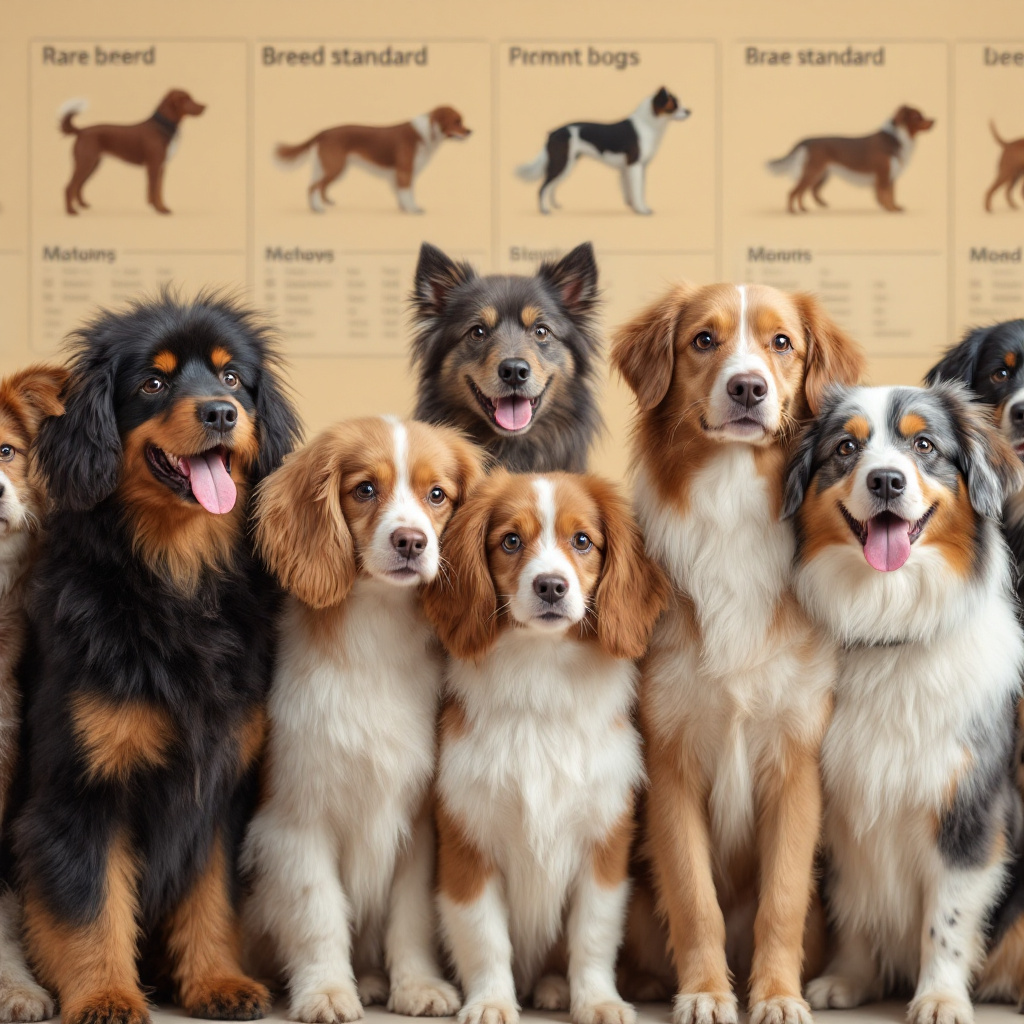
Breeding standards for rare dog breeds: Preservation of uniqueness
Rare dog breeds are the hidden treasures of cynology, often overshadowed by their more popular relatives. But what makes them special? It's the breeding standards that not only define the phenotypic characteristics of a breed, but also preserve its health, behaviour and even its historical context. Enjoy a journey through the fascinating world of rare dog breeds and their breeding standards. Let's take a deep dive!
Why rare dog breeds?
There are countless dog breeds, but the rare ones are the ones that make the hearts of many dog lovers beat faster. Why is that? Well, there are several reasons:
- Unique features: Rare dog breeds often have special characteristics that distinguish them from all others.
- Intact genetics: Because of their rarity, these breeds have often not been overbred, which can lead to more stable health.
- History and tradition: Many of these breeds have a fascinating history that supports their raison d'être.
All these aspects make the breeding standards of rare dog breeds of crucial importance.
The importance of breeding standards
Breeding standards are essential to preserve the integrity and characteristics of a breed. These standards are clearly defined by canine organisations such as the FCI (Fédération Cynologique Internationale) or the AKC (American Kennel Club). But why are these standards so important?
Oh, the breeding standards for rare breeds are by no means just a list of beauty traits! They are comprehensive guidelines that also Health, that Behaviour and the Durability of the breed include. Here are some of the main criteria:
- Exterior: From coat colour to tail carriage - every little detail counts.
- Health: Breeding standards include health checks and genetic tests to prevent diseases.
- Character: Important behavioural characteristics must be preserved in order to do justice to the breed.
Examples of rare dog breeds and their breeding standards
The Otterhound
Did you know that the Otterhound is an excellent swimmer? This dog breed, which can be recognised by its coarse, oily coat texture, was once the choice of otter hunters. The breeding standard emphasises:
- Waterproof coat: Must be tight and coarse to protect the dog in the water.
- Stable health: Regular hip dysplasia tests are required.
- Friendly nature: A gentle but determined temperament is a must.
The Sloughi
The Sloughi, originating from North Africa, is known for its speed and endurance. A true jewel of the curly banner of the canine nobility! The breeding standard provides for
- Body shape: Slim and muscular, just like a runner should be.
- Delicate and elegant: A gentle expression with almond-shaped eyes.
- Skin health: Regular check-ups for Skin problems due to its short coat.
The challenges of preserving these breeds
Preserving rare dog breeds is no easy task. It requires dedication, knowledge and a careful approach to breeding. Here are some challenges that breeders often face:
- Genetic diversity: With a limited population, there is a risk of inbreeding depression.
- Sustainability: A constant balance is required between the preservation of breed characteristics and the introduction of new genes.
- Public awareness: Publicising these treasures is often a difficult undertaking.
The way forward: protection measures
Proactive measures are needed to secure the future of these rare gemstones. This includes everything from research to education:
- Genetic studies: Support for genetic testing and diversity monitoring databases.
- Breeder training: Promote programmes for the training of breeders to ensure best practice.
- Awareness campaigns: To increase public interest and knowledge about rare dog breeds and their importance.
With the collective efforts of breeders, owners and the public, we can ensure that these rare dog breeds flourish in all their glory.
Concluding thoughts
The breeding standards of rare dog breeds are much more than just guidelines. They are a shield for the diversity, history and heritage of these unique companions. And let's be honest, who doesn't want to bring a little rarity into their everyday life? It's time to appreciate their uniqueness and actively work to preserve their standards. For the sake of our four-legged treasures!
Whether you are an experienced breeder or someone who simply has a soft spot for dogs, the world of rare dog breeds is fascinating and full of surprises. Let's get to discovering it!
FAQs on rare dog breeds
What are the challenges of breeding rare dog breeds?
Breeding rare dog breeds harbours various challenges. One of the biggest is maintaining genetic diversity in view of the usually small breeding base. Inbreeding depression can occur, leading to health problems. In addition, specialised knowledge of the breed is often required to preserve its unique character and physical traits.
Why are breeding standards particularly important for rare dog breeds?
Breeding standards are essential to maintain the specific characteristics and integrity of a rare dog breed. These standards help to avoid health problems and ensure that the characteristic appearance and behaviour of the breed is preserved for future generations.
Are there special organisations for the protection of rare dog breeds?
Yes, there are several organisations dedicated to the protection and preservation of rare dog breeds. These include international canine associations such as the FCI as well as various national breed clubs that offer specific programmes to support and promote these breeds.
How can you ensure that you adopt a healthy dog from a rare breed?
If you want to adopt a dog from a rare breed, it is important to choose a reputable breeder who adheres to breeding standards. Make sure that health certificates are available and that breeding practices are transparent. A personal visit to the breeder can also help to verify the breeding conditions.