
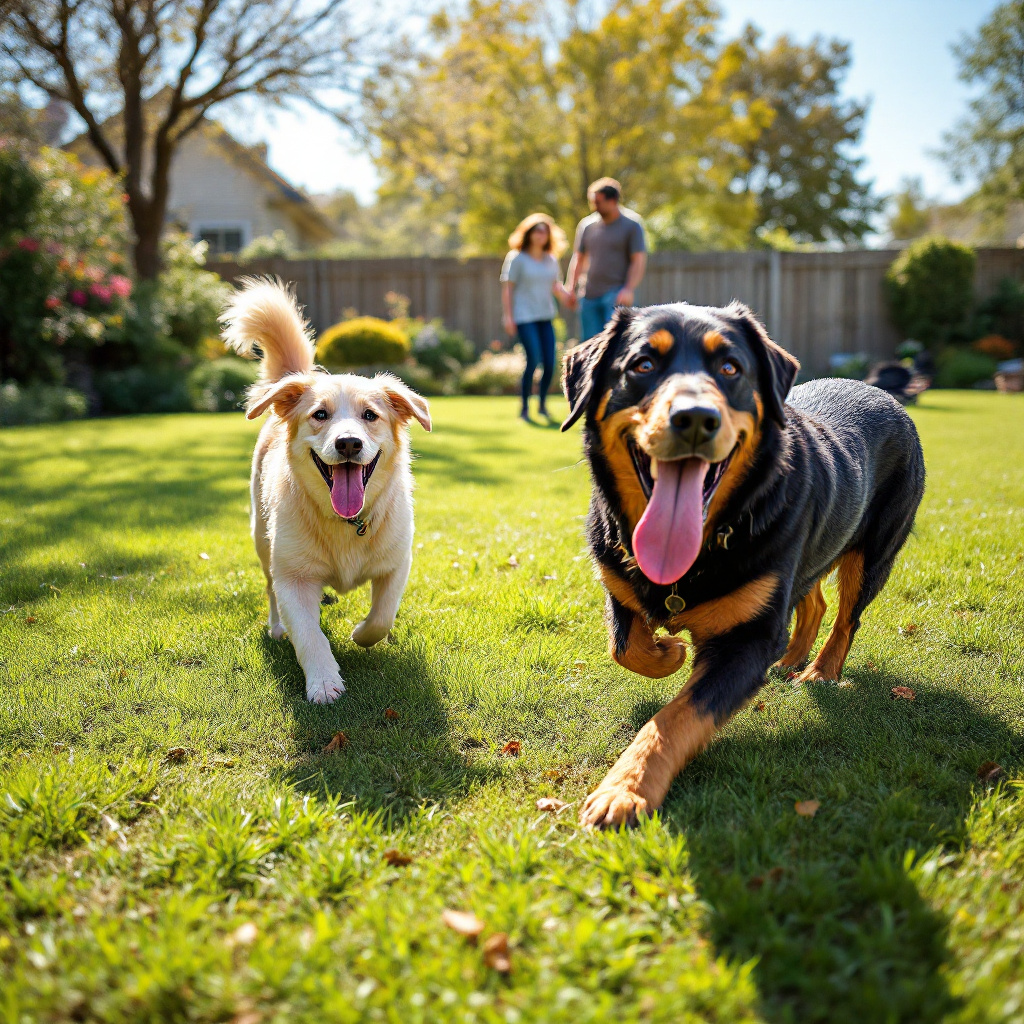
Comparison of medium and large dog breeds: Which one suits your active family?
Imagine you are looking for a furry companion to accompany you and your active family on all your adventures. The question that inevitably arises: Should it be a medium or a large dog? Don't worry, we've asked ourselves the same question and got to the bottom of it. In the following article, we look at the differences and similarities between medium-sized and large dog breeds and help you make the right decision.
Medium-sized dog breeds: The all-rounders
Medium-sized dogs are often the Goldilocks of the dog breed universe - not too big, not too small, just right! Weighing around 11 to 25kg and measuring 40 to 60cm tall, they are compact enough to live comfortably in a flat, but robust enough to satisfy an active family's thirst for adventure.
Advantages of medium-sized dogs:
- Space-saving: They don't need as much space as larger dogs, so they can also manage in smaller homes and gardens.
- Versatile: Many of these breeds are known for their adaptability and can easily switch from couch potato to outdoor adventurer.
- Cost-efficient: Less food and accessories often means lower monthly expenses.
Examples of medium-sized dog breeds are the Border Collie, known for its intelligence and agility, and the Beagle, which impresses with its friendly and inquisitive nature. Such breeds are particularly suitable for families who enjoy hiking or other outdoor activities.
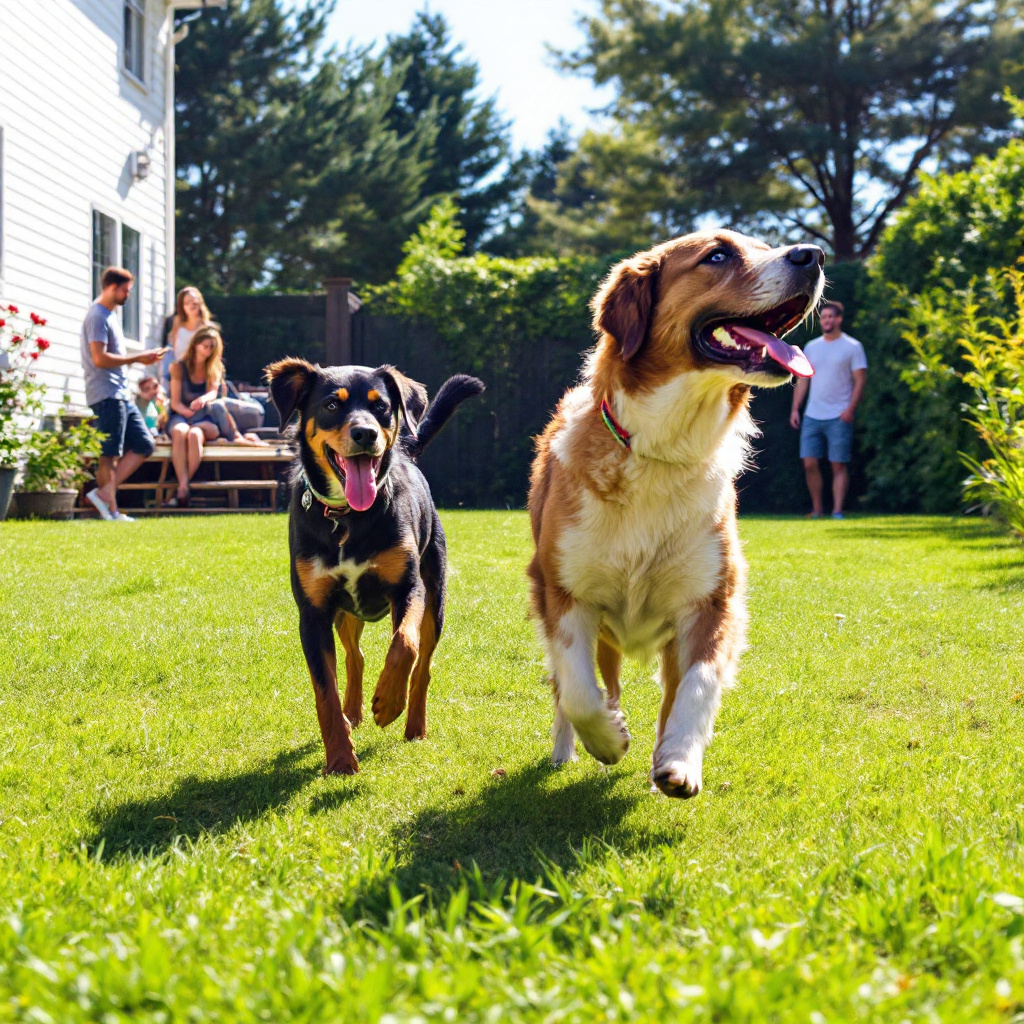
Large dog breeds: The gentle giants
Large dogs, which are often over 60 cm tall and weigh more than 25 kg, offer a completely different experience. These imposing companions are often more than just eye candy - they are loyal protectors and loving family members.
Advantages of large dogs:
- Protection and security: Their size alone can act as a deterrent, which makes them excellent guard dogs.
- Loyalty: Many large breeds are known for their strong bond with their owners.
- Patience and calm: Despite their size, many large dogs are gentle and show amazing patience, especially with children.
These include breeds such as the German Shepherd, known for its intelligence and work ethic, and the Bernese Mountain Dog, famous for its gentle and calm nature.
Activity levels: What suits your family?
The choice between medium and large dog breeds depends heavily on your family's activity level. Here is a brief overview:
Medium-sized dogs for active families
Medium-sized dogs are often very energetic and need regular exercise. Families who enjoy hiking, jogging or cycling usually find these four-legged friends to be enthusiastic companions.
Large dogs and their activity needs
Large dogs also need exercise, but many of them are not quite as hyperactive as their medium-sized counterparts. They enjoy long walks and the occasional play session, but are often more relaxed.
Space requirements: More space vs. clever space solutions
Space requirements are another decisive factor when comparing medium-sized and large dog breeds.
Which room for medium-sized breeds?
Medium-sized dogs are often happy with moderate space. A flat with access to regular exits can be quite sufficient for them. A small garden is an added bonus.
Large dogs and their space requirements
Larger dogs need more space to run around and stretch out. A spacious home, ideally with a large garden, will benefit them.
Adaptability: city life or country air?
Whether you are a city dweller or live in the countryside also influences your choice of dog breed.
Medium-sized dogs and the city
Due to their moderate space requirements and adaptability, medium-sized dogs often cope better with city life. They are flexible enough to adapt to different lifestyles.
Big dogs and life in the countryside
Large dogs do particularly well in the countryside, where they have plenty of space to explore. The open environment and greater freedom are perfect for their needs.
Conclusion: Which dog is right for you?
What a dilemma: medium or large dog breeds! Well, it depends on your particular family situation. Consider your living conditions, the amount of space available and how active your family is. If you have less space and are looking for a versatile companion, then a medium sized breed might be the ideal choice. However, if you have enough space and want a gentle giant, then a large dog could be the missing piece of the puzzle in your family picture.
No matter what size you choose: Dogs add just the right amount of joy and unconditional love to any adventure. So what are you waiting for? Open your heart and your home to your perfect furry friend!
FAQs
What size dog is considered medium?
At what size and weight is a dog considered medium-sized? A dog is considered medium-sized if it has a back height of 40 cm to a maximum of 60 cm. Incidentally, this is measured at the so-called withers. In other words, at the transition from neck to back, where the highest point of the shoulder blades is.
How heavy are medium-sized dogs?
Medium-sized dog breeds are neither small nor large. These dogs usually weigh between 11 and 25 kg and are between 40 and 60 cm tall.
What counts as a large dog?
The keeping of a dog that reaches a height at the withers of at least 40 cm or a weight of at least 20 kg when fully grown is referred to as a large dog and must be reported to the competent authority by the owner.
How do medium-sized and large dogs differ in terms of space requirements?
Medium-sized dogs usually need less space and can live well in flats if regular trips outside take place. Large dogs, on the other hand, benefit from a larger living space, preferably with a garden, so that they can move around freely.
Are large dogs more difficult to train than medium-sized dogs?
The difficulty of training depends less on the size and more on the specific breed and individual dog. Some large dogs are very intelligent and easy to train, while some medium-sized breeds require more perseverance. The best results are always achieved with patience and consistency.