Useful toys for pets: more than just fun
Pets bring life, joy and sometimes a bit of chaos into our homes. But whether dog, cat or guinea pig - they all need not only love and attention, but also useful toys to keep them healthy and lively. This article offers an exciting journey through the world of intelligent and entertaining toys that have been specially developed to promote the mental and physical fitness of our pets.
Why are toys important for pets?
Let's be honest, nobody likes boredom - neither humans nor animals. When our furry friends, whether on four paws or with snouts, get bored, it can quickly lead to unwanted behaviour. Just imagine: dusty sofas, chewed-up shoes or broken favourite vases. In short, the right activity is the key to a relaxed home.
Toys are not just a means of entertainment. They offer many advantages:
- Mental stimulation: Brain games challenge your pet's cognitive abilities. Intelligent treat dispensers or puzzle games can work wonders.
- Physical activity: An active pet is a happy pet. Balls to throw and fetch help to release energy.
- Stress reduction: Chewing and romping around can help to reduce stress and release feel-good hormones.
The world of toys: What suits whom?
For dogs: much more than a rubber ball
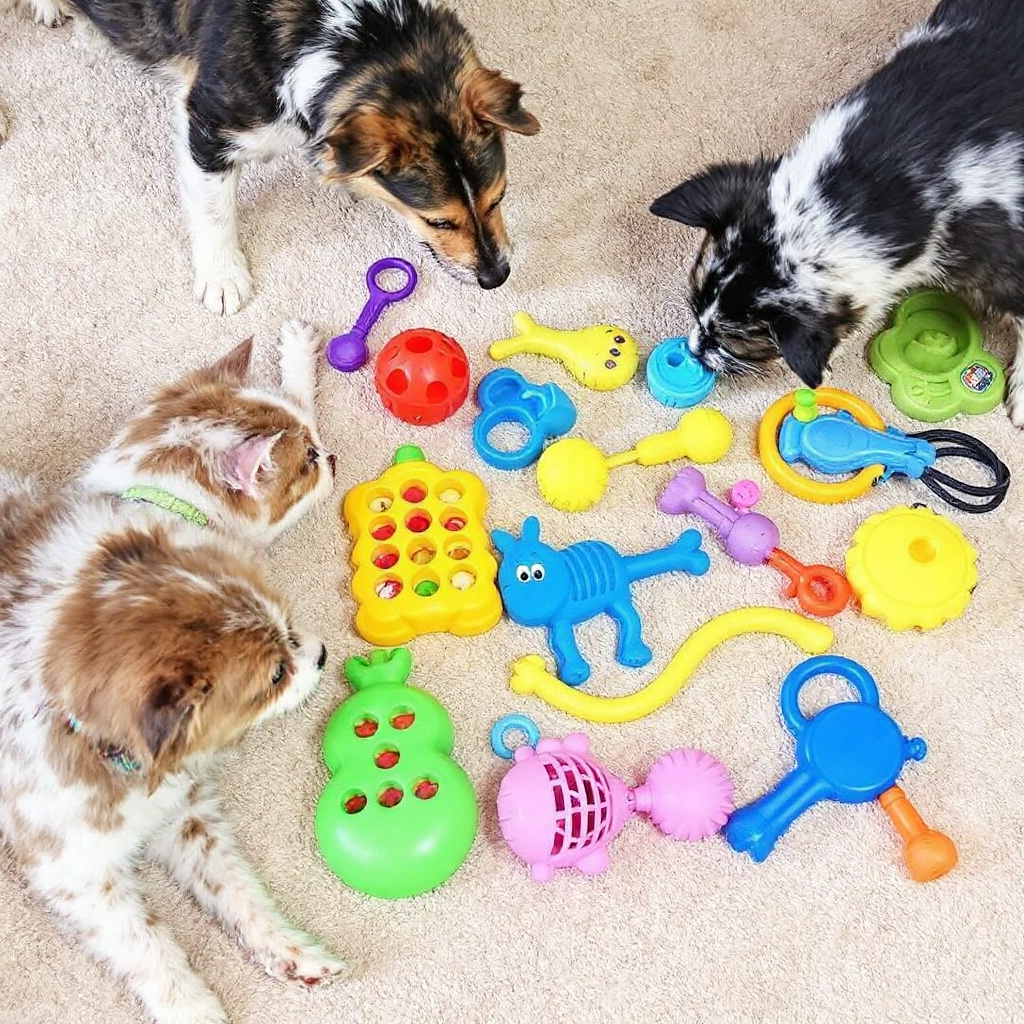
Yes, dogs love balls, but there's so much more! Here are some suggestions to keep your dog happy:
- Intelligence toys: Food balls and interactive puzzles are great for encouraging thinking skills. Dogs have to figure out how to get their reward.
- Chew toys: These are ideal for keeping teeth healthy and stopping destructive behaviour.
- Rope toys: Excellent for tugging games and for releasing excess energy.
For cats: Play like hunters
Cats are wilful, but they love to test their hunting skills. Consider the following options:
- Purring and scratching toys: Good scratching opportunities are a must, and toys with feathers attract the attention of every velvet paw.
- Laser pointer: Cats love to chase the red dot - be careful to avoid direct eye contact!
- Fumble board: Toys that hide treats and promote fine motor skills.
For small rodents: Little worlds of adventure
Rabbit, Guinea pig and co. enjoy interactive and varied toys just as much as their larger relatives:
- Climbing frames and tunnels: Provide the perfect opportunity to explore and sniff around.
- Chew and nibble toys: Indispensable for dental health and entertaining at the same time.
- Rolling toys: Balls or cylinders that can be moved by gently nudging them.
Tips for choosing the right toy
When buying pet toys, quality is the be-all and end-all. So how do we find the best options for our animal companions?
Some considerations when making your choice:
- Material: Avoid toxic substances and unsecured small parts.
- Size: Toys should fit the size of the animal and should not be swallowable.
- Security: Pay attention to robust workmanship to avoid injuries.
Do-it-yourself: creative game ideas for the home
Sometimes it's the simplest things that bring the most joy. Simple household tools can liven up the fun:
- Cardboard boxes: Cats love to climb in and hide.
- Old socks: Filled with a little catnip, they make a great toy for velvet paws.
- Plastic bottles: Filled with treats and provided with holes, they are an absolute hit with many animals.
The impact on health and well-being
Regular play has a direct impact on the health of our pets. Whether by improving motor skills, strengthening muscles or promoting mental acuity, useful toys for pets are invaluable.
The health benefits include
- Improved well-being: A happy animal is a healthier animal.
- Better socialisation: Pets develop social skills when playing with other animals or people.
- Weight management: Active animals are less prone to obesity and the associated health problems.
Conclusion: Investing in happy and healthy pets
In the world of pet must-haves, no stone is left unturned. The question is not whether we need toys, but which type is best suited. Useful toys for pets are much more than an accessory - they are an essential part of a balanced and healthy lifestyle for our pets.
At the end of the day, the choice is ours to find the right balance between pleasure and utility to give our beloved companions the best of the best - because at the end of the day, a happy pet means a happy home!
FAQs on useful toys for pets
Which toy is best for my pet?
Choosing the right toy depends on the species and the individual needs of your pet. Dogs love robust chew toys and intelligence toys that promote mental stimulation. Cats love feather toys and scratching posts, while small rodents benefit from climbing frames and tunnels. Make sure that the toy is safe and adapted to the size of the animal.
How often should my pet play?
The frequency of play also depends on the type of animal and its individual needs. The rule of thumb is: several times a day. Dogs often need at least 30 minutes, preferably an hour of active play every day, while cats and small rodents prefer shorter but more frequent play sessions. It is important to pay attention to your pet's signals and to adapt entertainment flexibly.
Can I make my own toys for pets?
Absolutely! Homemade toys can be an inexpensive and creative way to keep your pet occupied. Make sure to use non-toxic materials and adhere to safety standards. Popular DIY ideas include stuffed socks for cats or plastic bottles with treats for dogs. The possibilities are endless, so get creative and see what your pet loves the most.
How do I recognise whether a toy is safe?
Safety comes first when it comes to toys for pets. Make sure they are robust and free from small parts that could be swallowed. Toys made from natural and non-toxic materials are ideal. Regular inspections and the removal of damaged toys increase the safety of your furry friend.