
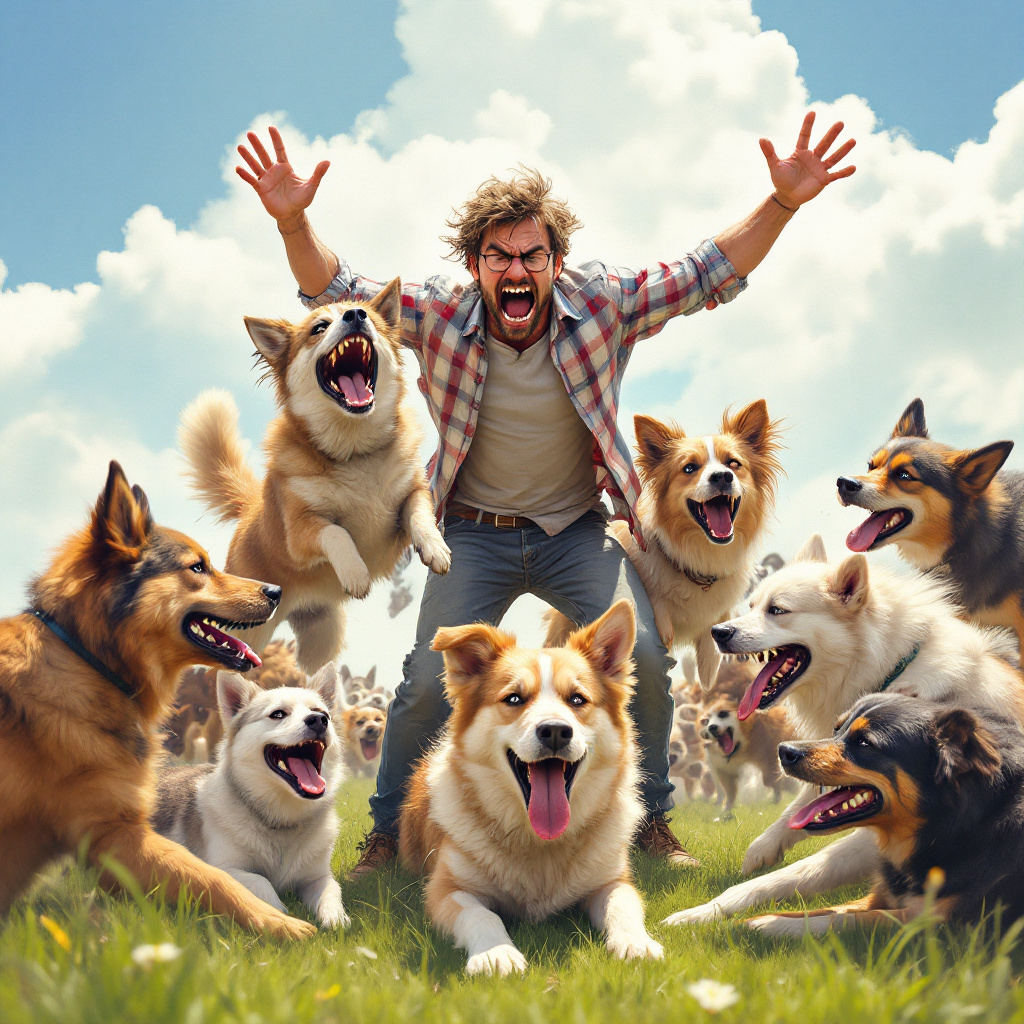
Dog breeds that are difficult to train: A challenge for the experienced
There are dog breeds that look straight into your heart with their loyal eyes, but at the same time put every owner to the test with their idiosyncrasies. If you think you're an experienced dog trainer and are looking for a furry friend that's more than a little challenging, then you've come to the right place. Off you go on an exciting journey through the world of difficult-to-train dog breeds!
What makes a dog breed difficult to train?
If you ask yourself why some breeds are considered difficult to train, there is usually no clear answer. In most cases, an independent character, strong instincts or simply stubbornness play a role. Some of these dogs have a strong personality and prefer to have a mind of their own rather than a nose in the book of obedience. Here are some of the main reasons why some breeds are harder to train:
- Self-employment: Breeds with a pronounced urge for freedom tend to make their own decisions.
- High intelligence: Despite their smart brains, some dogs prefer to use them for creative escapes rather than commands.
- Instinct-driven: Dogs with strong hunting instincts often follow their primal instincts over their owner's instructions.
Candidates for the challenge: the hard-to-raise breeds
Now that we know what makes a breed difficult, let's take a look at some of the most popular builders in this category. Each of these breeds has its own reasons why it is considered difficult. Let's take a closer look at the candidates:
1st Afghan greyhound
Elegant, fast and, oh yes, a little headstrong - the Afghan greyhound is a real eye-catcher! These beauties of the dog world are known for their independence. Originally bred for hunting, they have a penchant for sprinting out into the wide world without instructions.
Their pronounced sense of individuality makes training quite a challenge. Experienced trainers have to come up with a lot of patience and creative training methods to keep the attention of these noble dogs.
2. dachshund
The small dachshund, also known as a dachshund or sausage dog, likes to disguise its strong personality with its cute appearance. Originally bred to hunt underground, dachshunds have a mind of their own and a good deal of stubbornness.
Owners really need to push their positive reinforcement and consistency to the extreme to steer this little daredevil in the desired direction!
3. shiba inu
Japanese tradition meets modern challenges: the Shiba Inu is known as a funny but also very independent dog. Their feline nature means that they are often selectively deaf - a bit of an art in itself to find the right method to encourage attention.
The challenge is to keep the Shiba Inu busy with creative, varied training methods while respecting its independence.
4th Alaskan Malamute
The large and powerful Alaskan Malamute is not only an eye-catcher, but is also bursting with energy. Bred as a sled dog, he needs constant exercise and mental stimulation to keep him happy and busy.
Unfortunately, this also means that he himself is difficult to train when it comes to obedience exercises. An experienced all-rounder with persistent training discipline is required here!
5. chow-chow
With their lion-like mane and unmistakable blue tongue, Chow Chows are fascinating dogs. However, their almost cat-like nature can be a challenge for training success.
This breed tends to be aloof and a little stubborn - they demand respect and do not give their loyalty lightly. Trainers need patience and empathy to gain their trust.
Training tips for hard to train breeds
The fact that some dog breeds are more difficult to train does not mean that it is impossible. With the right approach and the right plan, even the most stubborn dog can be made to co-operate. Here are some tips for successful handling:
- Positive training: Use rewards and positive reinforcement to encourage desired behaviours. This method works particularly well with dogs that have a mind of their own.
- Consistency is key: A consistent routine will help your dog understand expectations and behave accordingly. Without consistency, some dogs like to slip back into old patterns.
- Varied activities: Keep the training interesting and varied to keep your dog's attention. Use toys, tricks and getting off the beaten track to motivate him.
- Perseverance and patience: Sometimes you simply need more time and patience when working with difficult breeds. No overnight success - stay consistent, even if quick progress proves deceptive.
Conclusion: The reward for perseverance
Yes, difficult to train dog breeds can push some people to their limits, but the reward for the effort is a loyal companion who will follow you through thick and thin. These breeds need experienced trainers who accept the challenge with passion and attention.
At the end of the day, it's the small victories that are worth sharing, whether you have a headstrong Afghan Hound or a calming Chow Chow around you. It's the relationship you build that really makes the difference!
FAQs
Which dog breeds are the most difficult to train?
Some breeds have a reputation for being particularly stubborn. These include
- Hard to train dachshunds: These small but extremely wilful dogs often have a mind of their own.
- Hard to train Chihuahuas: Despite their size, they are cheeky and inviting in their character.
- Afghan greyhounds that are difficult to train: Their independence makes training challenging.
- Hard to train bulldogs: These charming dogs can be extremely stubborn.
- Hard to train Chow Chows: With their proud nature, they are not easy to influence.
Which dog breed is more difficult to train, the Afghan Hound or the Chow Chow?
Both breeds have their quirks. Afghan greyhounds are known for their independence and their tendency to listen to their instincts, whereas chow chows often show a distant and self-determined attitude. The choice between the two depends heavily on your own experience and desired training methods.
Which dog is the easiest to train?
Some breeds are known for their willingness to learn and their obedience:
- Golden Retriever: These popular companions are extremely eager to learn and friendly.
- Poodle: Not only intelligent, but also very adaptable.
- Papillon: A small but clever dog that can learn almost any trick.
- Bichon Frisé: Charming and receptive to positive training methods.
- Havanese: Known for their friendliness and willingness to co-operate.
- Labrador: Their gentle and sociable nature makes training a pleasure.
- Bernese Mountain Dog: The calm composure of this breed favours obedient behaviour.