
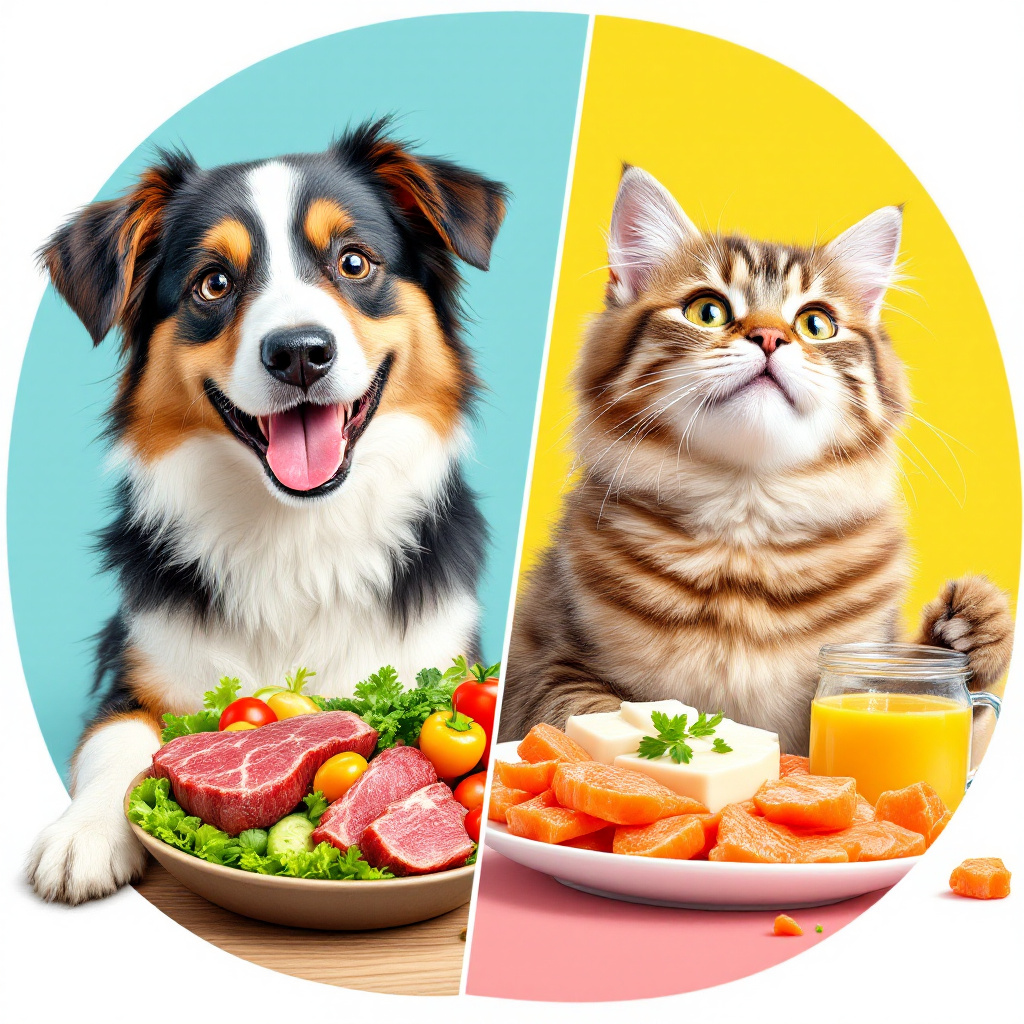
Nutritional requirements for dogs and cats: ensuring our furry friends snack healthily
Pets enrich our lives, and we care deeply about their well-being. The nutrients they get from their diet are a key part of their health. Dogs and cats differ not only in their behaviour but also in their nutritional needs. Let’s delve into the fascinating world of dogs’ and cats’ nutritional requirements and discover what they really need to be healthy and happy!
The basics: What do dogs and cats really need?
Not all animals are created equal, and this is also reflected in their nutritional requirements. Interestingly, essential nutrients such as proteins, fats, vitamins and minerals play a crucial role in this. Let’s take a closer look:
- Proteins: Protein is essential for building and maintaining muscle. Whilst dogs can obtain protein from plant sources, cats rely on animal protein. Ah, those sophisticated hunters…
- Fats: Fats are an important source of energy and aid the absorption of fat-soluble vitamins. Please note that some fatty acids are essential and must be obtained from food.
- Carbohydrates: Dogs can use carbohydrates for energy, whereas cats are not as efficient at processing them. For them, switching to chicken or fish is the easier option.
- Vitamins and minerals: A wide range of vitamins and minerals helps ensure healthy bones, teeth and a strong immune system. It’s hard to believe, but it’s true: cats are unable to absorb vitamin A from plant sources.

A look behind the scenes: the metabolism of dogs and cats
It’s like night and day! Whilst dogs are omnivores, cats are strict carnivores. But what exactly does that mean for the nutritional needs of dogs and cats?
Dogs have developed the ability to utilise a wider range of food sources, including plant-based foods. Their metabolism is therefore designed to process a variety of macronutrients. In contrast, cats are true carnivores. Their metabolism is specialised in extracting amino acids from animal sources. This makes the famous taurine all the more important, as it is essential for cats and is not found at all in plant-based foods.
Individual needs: age, breed and lifestyle – the order of the day?
As is so often the case in life, it is difficult to make sweeping generalisations, as pets’ individual needs vary greatly. Let’s bear the following in mind:
- Age: Young kittens and puppies need a particularly nutritious diet, rich in protein and energy, to support their growth.
- Race: Some breeds, such as the Maine Coon or the St Bernard, have specific needs. Their large frames require a tailor-made diet.
- Activity level: A hyperactive Border Collie needs more energy than a laid-back Bulldog companion.
Healthy snacks: Treat your furry friend wisely
Ah, the satisfying crunch of a snack – a treat for both humans and pets! But caution is advised here too, as not everything that crunches is healthy. Here are a few suggestions for treats you can safely give your dog or cat:
- Dogs:
- Carrot sticks – low in calories and packed with vitamins, though not really suitable for cats!
- Apple pieces – they add a touch of freshness and are a juicy treat, even if the core is off limits.
- Freeze-dried liver – the protein boost that cats love too.
- Cats:
- Tuna in its own juice – a classic that’s always a hit.
- Unseasoned chicken strips – easy to prepare and full of flavour.
- Small pieces of boiled egg – rich in protein and vitamins.
Concluding remarks: It’s all about striking the right balance
Oops! We’ve reached the end of our exciting journey of discovery. The nutritional needs of dogs and cats are a complex subject that requires a deeper understanding. But with the right information, we’re getting closer to our goal of giving our four-legged friends a life full of vitality and well-being. A balanced diet is what matters – because it is the key to a long and happy life.
By taking their specific needs and preferences into account, we can give them the attention and care they deserve. And as the saying goes: the way to the heart is through the stomach – and that goes for our animal companions too!
FAQs on the nutritional requirements of dogs and cats
What nutrients does a dog need?
Fat-soluble vitamins and minerals are essential for dogs to stay healthy. These include:
- Fat-soluble vitamins: vitamins A, D, E and K
- Water-soluble vitamins: vitamins B, C and H
- Key elements: calcium, sodium and magnesium
- Trace elements: iron, zinc and iodine
What nutrients does a cat need every day?
Cats need specific nutrients to stay healthy. The following elements play a crucial role in this:
- Macronutrients: calcium and phosphorus, magnesium, sodium and potassium
It is particularly important that calcium and phosphorus are present in a 1:1 ratio in order to strengthen bones and teeth as effectively as possible.
How much protein and fat do dogs need?
The composition of your dog’s food is crucial to your pet’s health. A balanced diet should contain the following:
- Carbohydrates: 45–55 per cent
- Protein: 35–45 per cent
- Fats and oils: around 5 per cent
- Fibre: 2–5 per cent