

Dog and travel costs: What you need to know before travelling with your four-legged friend
Are you planning your next trip with your furry friend? Then you should definitely keep an eye on dog and travel costs. In this blog post, we take a look at the various financial aspects you need to consider when travelling with your dog. Get ready for exciting facts, useful tips and a bit of dog talk as we explore total costs by dog breed and travel and holiday planning.
The various cost factors for travelling with dogs
Anyone embarking on the adventure of travelling with their dog should not only plan the route and the most beautiful destinations, but also factor in the travel costs. But what exactly are dog and travel costs? Here is a brief overview:
- Transport costs: Whether by car, train or plane - each mode of transport has its own advantages and disadvantages. Please note that there may be additional charges for dog crates or special dog trolleys on the train.
- Accommodation: Not all hotels or holiday flats are „dog-friendly“. Additional fees are often charged, which can vary depending on the breed of dog.
- Feed and special care: Depending on your dog's preferences, it may be necessary to pack special food or treats. This applies in particular to dogs with special dietary requirements.
- Vaccinations and health: Before travelling, you should make sure that all your dog's vaccinations are up to date. Some countries require specific proof.
- Leisure activities on site: Dog parks, visits to the beach or hiking tours - some activities can also be expensive.
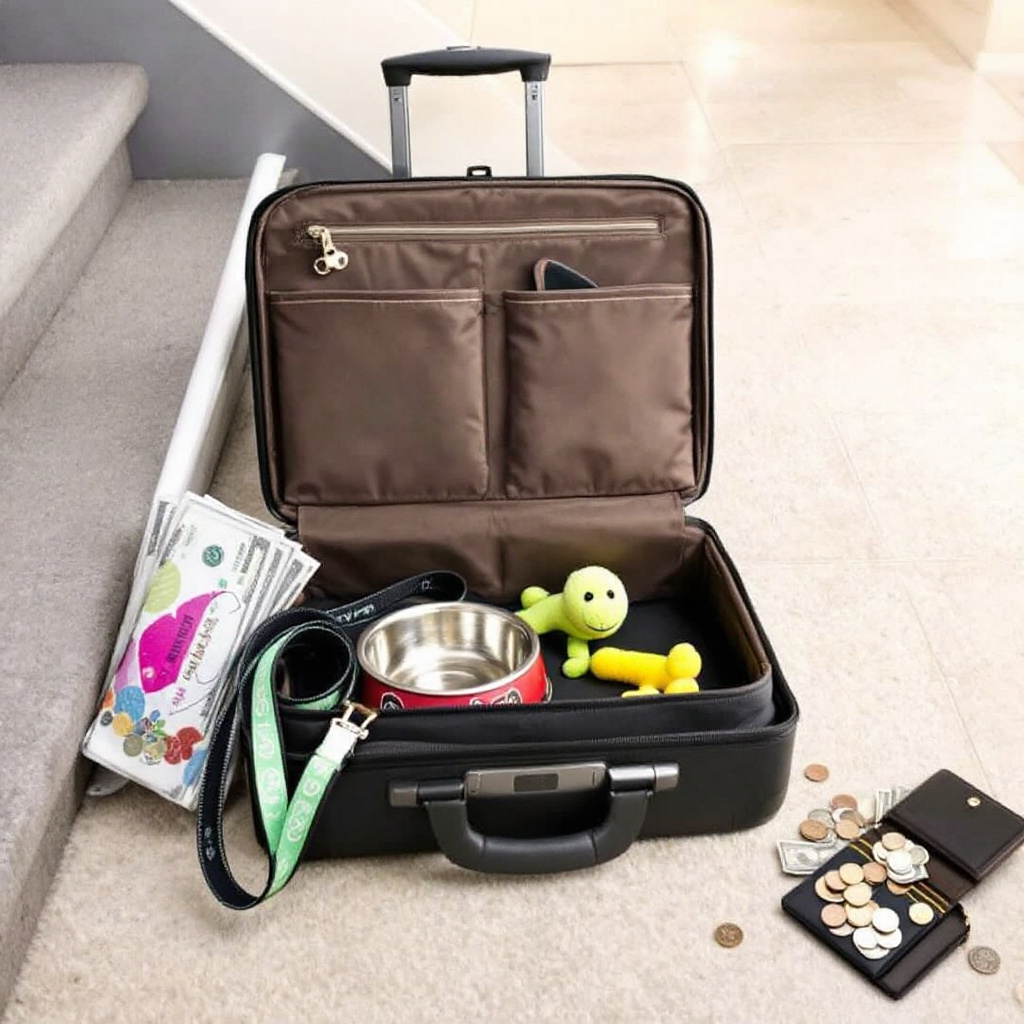
The role of dog breed in travel costs
It may surprise you, but the breed of your dog plays a significant role in dog and travel costs. Large dogs such as Great Danes or St Bernards tend to cost more in accommodation as they require more space - compared to smaller breeds such as Chihuahuas or Yorkshire Terriers.
The following aspects affect travelling costs depending on the breed:
- Transport costs due to size: Larger dogs require more space and increased safety precautions during transport, which drives up the costs. Many airlines also charge higher fees if your dog does not pass as hand luggage in the cabin.
- Accommodation costs: The larger the dog, the higher the accommodation fees are likely to be. So find out exactly which hotels in your price range are dog-friendly.
- Feed quantity: Nutritional requirements differ greatly between breeds. A large dog consumes more food, which increases costs in the long term.
Budget tips for travelling dog owners
Even though travelling with a dog involves additional costs, there are numerous tips and tricks for staying within a budget. Are you curious? Then read on!
Book early
Booking your accommodation and transport early can often result in bargains. Many places offer discounts for early bookers, and this applies to both people and their four-legged companions.
Take food and water with you
Make it a habit to carry enough food and water with you when travelling. This will save you expensive purchases while travelling and avoid food-related complications.
Shop locally
While some things, such as medication, should be bought before travelling, it is worth buying certain items such as toys or gadgets locally. Local products are often cheaper and adapt to the needs of the local environment.
Transport your dog cleverly
Enquire about the best transport options for your dog. Railway companies often offer special discounts for dogs. Car-pooling or car-sharing is also a cost-effective alternative to travelling by car or plane.
Conclusion: Travelling with a dog - a question of planning
Although travelling with your dog may be a challenge in terms of finances, the cost and effort is well worth it. With the right planning and a clear budget strategy, you and your four-legged friend can discover new places without putting too much strain on your bank account.
Remember that dog and travel costs can vary depending on the destination, the length of the trip and your specific requirements. But with a little preparation and these tips in your luggage, nothing stands in the way of an unforgettable adventure with your dog!
FAQs
Can the cost of dogs be deducted from tax?
Veterinary costs are generally not deductible. There is no tax benefit for normal dog owners. However, there is one exception: if you only keep an animal for professional reasons - for example police horses or therapy dogs - you can deduct the veterinary costs from your tax bill. This then counts as business expenses.
Can I book a seat for my dog?
Yes, you can purchase a Comfort seat for your dog, even if you are travelling with your pet. This is particularly advisable for longer train or plane journeys to ensure sufficient space and comfort for your four-legged friend.
Can I take a dog with me on the 49 Euro ticket?
Dogs cannot be carried free of charge on the Deutschland-Ticket. The carriage of chargeable dogs is not included in the Deutschland-Ticket. You must purchase a separate ticket for chargeable dogs.