
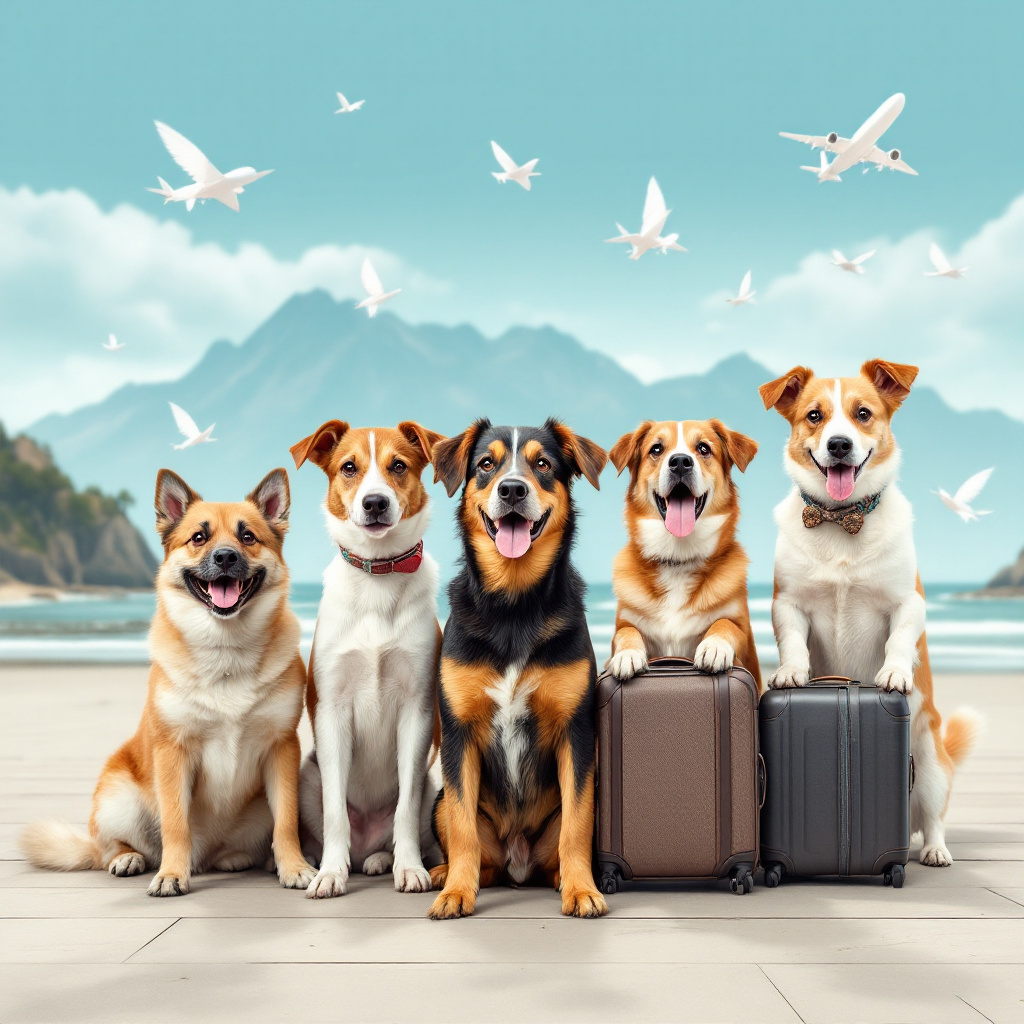
Travelling with your best friend: total costs for holidays with your dog
Ah, holidays - the perfect opportunity to explore the world, leave the stress of everyday life behind and create new memories. But what if your faithful four-legged friend is by your side? Travelling with your dog can be an incredibly rewarding experience if you keep the total cost in mind. So, get your leashes ready, because we're diving into the world of holiday costs with dogs!
Dogs on board: transport costs
Whether you're travelling by car, train or plane, taking dogs with you often means additional costs and planning. But don't worry, here are some important considerations and tips:
- Car: Transporting dogs by car is usually the easiest and cheapest, especially for short journeys. However, you should consider purchasing seat belts or a transport box.
- Train journeys: On many trains, small dogs travel free of charge if they stay in a transport box. Larger dogs often require a separate ticket.
- Flights: Flying with a dog can drive up costs. Many airlines charge fees for pets depending on the size and destination of the flight. Also consider whether your dog needs to travel in the hold or can be in the cabin by your side.
The bottom line: be prepared to hit the piggy bank a little harder, especially if you're travelling long distances.
Accommodation: Where does Bello sleep?
Choosing the right accommodation can make or break your holiday, especially if you are travelling with an animal companion.
- Hotels: Many hotels welcome dogs, but often with additional charges. Amenities such as dog beds or bowls can also affect the price.
- Holiday flats: Perhaps the better choice for dog lovers, as they often offer more space and flexibility. However, the cleaning costs might be a little higher.
- Camping: An excellent way to give your dog more freedom. Bear in mind possible charges for pets on the campsite.
Activities and entertainment: more than just walking the dog
Who says your dog doesn't deserve a holiday? Plan activities that your dog will enjoy as much as you do. Of course, this also entails costs:
- Dog-friendly beaches and parks: Ideal for a day of fun, but sometimes they charge an entrance fee.
- Dog parks and agility courses: A great way to entertain and train your dog. These activities are also available for a fee.
Make the most of it: many activities can be made affordable with a well-planned savings plan!
Not to forget: Paw-friendly emergencies and care costs
As always, the unexpected emergency can come into play. Perhaps your four-legged friend has eaten something wrong or needs an extra grooming session after a long day outdoors.
- Visits to the vet: It is advisable to find out about local vets. Emergency visits can be very expensive in an unfamiliar environment.
- Care: After an outdoor adventure, professional cleaning may be necessary, which means additional costs.
A few surprising facts about dog irons
Did you know that some luxury dog hotels offer what humans can only dream of? Massage treatments, gourmet menus, and fresh sheets every day - just in case your dog favours the premier league.
Interestingly, a survey has shown that owners of small dog breeds tend to spend more on travelling. Is it because of all the cute accessories or simply because small dogs are easier to transport? Who knows...
Estimate and plan total costs
It's clear that the total cost of travelling with a dog varies depending on the dog breed, preferred mode of transport, accommodation and planned activities. Travelling is all about being well prepared and planning ahead. Create a budget and add a buffer to cover unexpected expenses.
It may seem like a lot at first, but the joy of exploring the world with your dog is worth every cent! So what are you waiting for? Pack up the treats and off you go! Man's best friend will thank you for it.
FAQs
What is included in the total costs?
The name already suggests it: Total costs include all costs incurred by a company within a certain period. In English, this is also referred to as total cost.
How do I calculate the total costs?
The formula for total costs is: total costs = (fixed costs + variable costs) x number of units. Both fixed and variable cost elements are critical to calculating the break-even point. Companies can use this formula to predict how many items they need to sell in order not to turn a negative profit.
How are the total costs made up?
Total costs are made up of: Direct costs and overheads or fixed costs and variable costs. They can be broken down into cost types or cost centres. The opposite of this is unit costs.
Can total costs vary when travelling?
Absolutely! The total cost of travelling can vary greatly depending on factors such as the time of travel, choice of transport, accommodation and planned activities. Especially when travelling with pets or special equipment, there are often unexpected costs that need to be taken into account.
Why is it important to keep an eye on the total costs?
Calculating and monitoring total costs enables you to stay financially organised, both in your day-to-day business and in your private life, such as when preparing for holidays. A clear overview helps you to avoid unnecessary expenditure and maintain a balanced budget. This way you can avoid financial surprises while travelling.