Mental exercise for pets: Why intelligence games are so important for cats
Cats are curious and intelligent creatures by nature. They love challenges, especially when a tasty reward beckons. Unfortunately, many pet owners think that throwing the cat a ball or a plush mouse is enough. But the mental stimulation that cats need goes far beyond that. The Mental exercise for pets, especially through intelligence games, is essential to avoid boredom and the associated behavioural problems.
Why do cats need mental exercise?
Cats are amazingly intelligent creatures. If they are not sufficiently challenged, they seek out activities that often lead to displeasure among their owners - scratched furniture, nightly hunting games through the flat or excessive meowing. But wait a minute, why is that? Let's take a look at the reasons:
- Cognitive health: As in humans, mental activity in cats promotes brain health.
- Prevention of boredom: Cats that are bored can become destructive. Mental stimulation keeps you one step ahead of this problem.
- Stress reduction: Cats that are mentally busy are less prone to anxiety-driven behaviour.
Every cat is unique, but one thing is certain: mental exercise is essential for pets to lead a healthier and happier life. Let's dig into the meat of the matter!
Intelligence games for cats: The key to the mental challenge
In the colourful world of cat entertainment, intelligence games have become an indispensable part of mental exercise. But hey, it's not just a gimmick, it's a real game changer!
1. feline puzzles: cat-friendly puzzle games
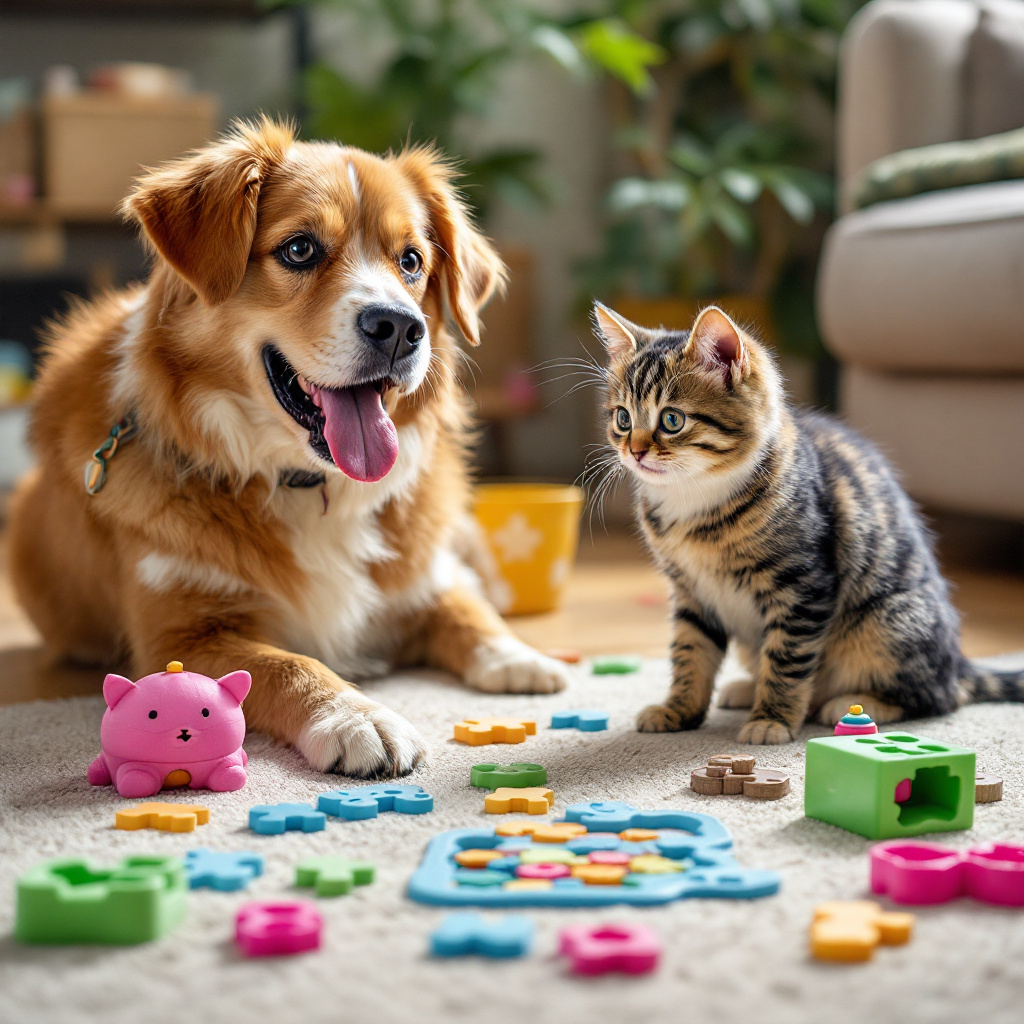
Cat puzzles are a fantastic way to challenge your cat. Imagine you're Indiana Jones searching for treasure - a well-thought-out puzzle is just as exciting for your kitty! These games encourage problem-solving skills and keep the brain active.
- Treat dispenser: Games in which the cat has to see through a hiding place or operate a mechanism to get snacks.
- Ball mazes: A sure-fire hit with a ball inside a maze that your furry friend can roll back and forth.
2. clicker training: more than a simple trick
You may have heard of clicker training. This is a method that is often used in dog training, but also achieves wonderful results with cats. It forces the cat to concentrate and learn new tricks.
Want an example? Imagine your cat zig-zagging around obstacles or raising a little paw in greeting. Not only is it super cute, it's also a great way to channel mental energy.
3. hide-and-seek: the playful hunting instinct
Cats are natural hunters. They therefore appreciate games that awaken and encourage their hunting instincts. Here are a few tips:
- Hide treats: Parts of the home should be transformed into a small adventure park, with treats placed under blankets or behind cushions.
- Spring fishing rod: Tried and tested, but spot on! A feathered fishing rod awakens every cat's passion for hunting.
Don't get me wrong, the fun and interaction factor is huge, but these games also bring significant brain training benefits.
Toys for pet brain training: On your mark, get set, go!
The market offers an almost endless selection of toys specifically for training pets' brains. The trick is to find the right toy for your pet. Here are some favourites:
- Kong Wobbler: Actually known from the dog world, but cats also love this hard-to-grab food dispenser. It not only stimulates the grey cells, but also keeps them fit.
- Activity Boards: These boards offer a variety of tasks, each with its own reward. Perfect for challenging your cat's ingenuity.
- Electronic fish: They swim around the home in their little water bowl and promise hours of fun.
How do I approach intelligence games?
Aha, you're interested, but how do you get these brain training toys and games closer to your cat? Don't worry, here are some essential tips to make it a real success:
1. patience is a virtue
Don't rush things! Your cat needs time to get used to the new toy or game. Let them learn at their own pace.
2. motivation through rewards
Yes, cats are demanding. Reward them with treats or words of praise to motivate them further. A small snack can work wonders! Fine!
3. variety is the key
Change the toys and games regularly. Cats love variety and will soon become bored if the range of games is not changed regularly. Keep the excitement going!
4. safety first
Make sure that the toys have no parts that can be swallowed and are safe for your furry friend. After all, safety is the be-all and end-all!
The big picture: getting the best out of your cat every day
To summarise, mental exercise is an essential part of a healthy and happy lifestyle for pets, especially cats. By providing various brain games and mentally stimulating toys, you can ensure that your four-legged friend stays healthy, happy and balanced.
Invest a little time in exercising your pet and you'll be surprised what new tricks your cat has up its sleeve. Who knows, maybe your tiger will be the next big star in the cat universe?
So, what are you waiting for? Go in search of the perfect toy and start your next adventure with your cat!
With this in mind, happy playing, and don't forget the extra portion of love that rewards all the effort at the end of the day!
FAQs
How often should a cat be mentally exercised?
It is enough to keep your cat busy with interactive games for about 15 to 30 minutes a day. A regular routine is important to maintain the fun and mental exercise.
Which toys are best for keeping cats mentally active?
Cats love toys that combine exercise and tricky tasks. Activity boards, puzzle toys and electronic mice are particularly recommended as they stimulate interest and keep the brain active.
Can every cat learn clicker training?
Yes, almost every cat can learn clicker training! The challenge is to motivate the cat with rewards and patiently teach it new tricks step by step.
Are there any risks involved in the mental exercise of cats?
As long as you make sure that the toys are safe and free from small parts that can be swallowed, there is no direct danger. It is important not to overwhelm the cat and to pay attention to its body signals.
How do games affect the behaviour of cats?
Cats that are regularly mentally stimulated often show less destructive behaviour, are more balanced and less anxious. Overall, mental exercise helps to promote harmonious coexistence.