Suitable means of transport for large pets: the ultimate guide
Anyone who shares their life with large pets knows the challenge: how do you get a Labrador, a Maine Coon or a large rabbit friend from A to B safely and comfortably? Large pets not only require more space when travelling, but often also special planning. So how do you choose the right means of transport? Below we offer some useful tips and requirements for transporting your large four-legged friend safely.
The challenges of transporting large pets
Without further ado, large pets can be a little more difficult to handle when transporting. Their weight and size make many of the typical transport solutions impractical. From cars to public transport to air travel, the list of potential obstacles and challenges is long:
- Space requirement: Larger animals need more space, both for the transport box and for freedom of movement.
- Safety measures: A simple transport box is often not enough; robust systems are required to keep the animal safe.
- Convenience: Even on longer journeys, there should be no lack of comfort so that the animal is transported stress-free.
- Travel compatibility: The means of transport must not only be practical, but also compatible with different modes of transport.
Suitable means of transport for large pets: an overview of the options
Don't worry, there are more than enough options to get even large animals safely from A to B. What options are there?
Transport in the car: safety first!
For many pet owners, their own car is the obvious choice. But here too, safety is the top priority.
- Transport boxes: These offer a safe way of transporting large pets. Boxes made of metal or solid plastic are often ideal for larger animals as they are robust and stable. Make sure you choose a crate that is large enough for your pet to turn round and lie down.
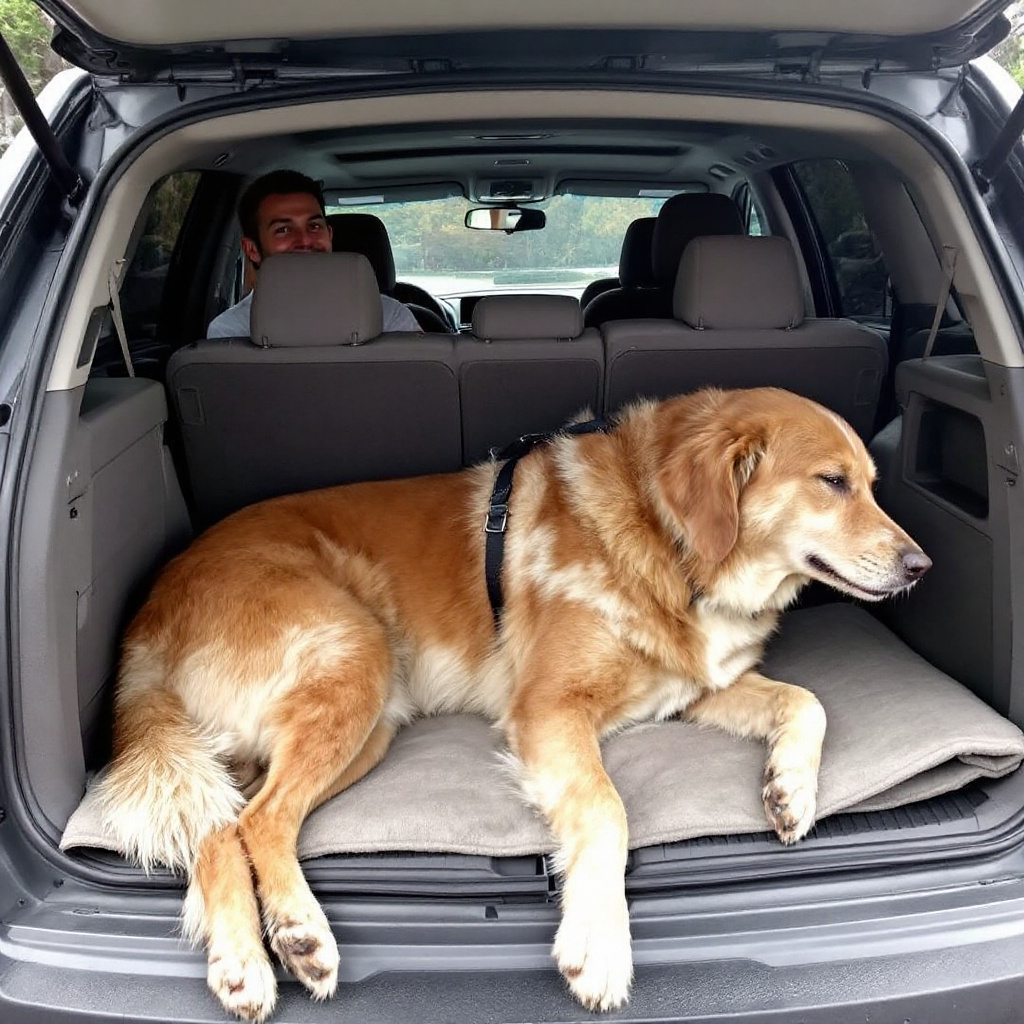
- Belt systems: These work in a similar way to seat belts for humans. Specialised harness systems can be used for large dogs to secure them in a seat. However, they are often less secure than crates.
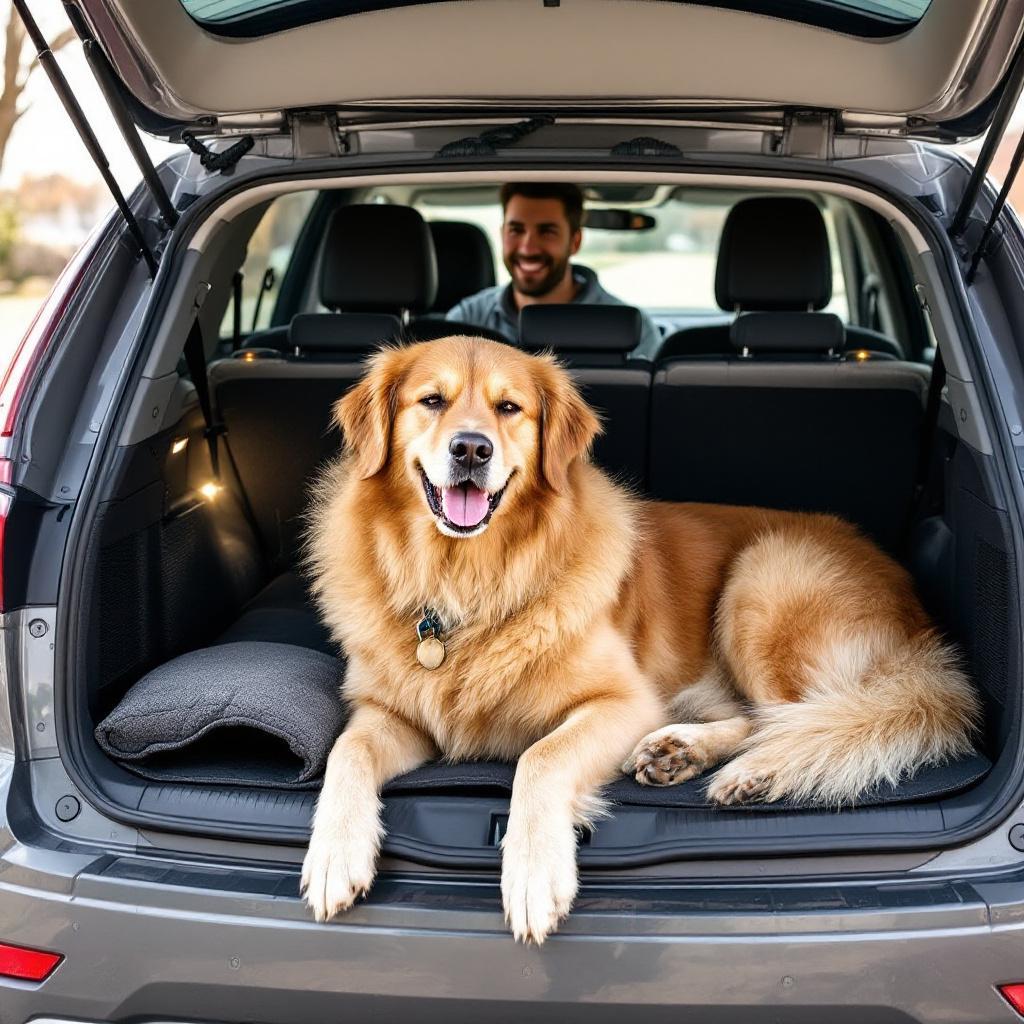
- Separation nets: These separate the boot from the seating area and give dogs the freedom to travel in the boot. However, this method is less safe in the event of sudden braking manoeuvres.
Public transport: opportunities and challenges
Transporting larger pets on public transport? Yes, it is possible! Here are some tips:
- Train or bus journeys: Most trains and buses allow large pets as long as they are muzzled and the owner takes responsibility. An additional ticket is often required.
- Transport boxes: Although it may seem impractical to put your furry friend in a box, this is often the safest method on crowded transport.
- Sensible preparation: Plan your journey outside peak times to minimise stress for the animal. Take a look at the regulations of the respective means of transport, as these often vary from region to region.
Travelling by air: What to bear in mind
Travelling by air with large pets requires some preparation, but it is possible if you know the rules of the game.
- Transport cages: Airlines have strict rules and regulations regarding the type of transport cages. An IATA-certified box that fulfils the international transport standard is often required.
- Early booking is everything: As the number of animals per flight is limited, it is advisable to book early. The lead time should be generous in order to clarify all enquiries.
- Veterinary certificates and documentation: Health certificates and proof of immunisation are mandatory for international travel. Obtain the necessary documents in good time.
Safe and stress-free travelling for your large pet
Travelling with a large pet can be a lot of fun, provided all measures are taken for protection and comfort. Here are some golden rules that should be followed:
- Slow familiarisation: Let your pet gradually get used to the chosen means of transport. Start with short test drives to prepare the animal for longer journeys.
- Sufficient breaks: Plan regular breaks, especially on long car journeys, to give your pet the opportunity to move and relax.
- Avoidance of stress: A familiar blanket or a favourite toy can work wonders to make travelling more pleasant for your pet.
Conclusion: making the right choice
Finding suitable means of transport for large pets can make travelling with your four-legged friend much easier. Factors such as safety, comfort and the planned mode of transport determine the choice of suitable method. What ultimately counts is careful preparation and consideration of the individual needs of your large animal. So nothing stands in the way of adventurous and carefree travelling!
Whether on a spontaneous road trip, a stress-free journey by train or an exciting flight adventure - with carefully selected means of transport, nothing stands in the way of an unforgettable time with your large pets!
FAQs: Frequently asked questions about transporting large pets
How do you transport large dogs in the car?
Large dogs should either travel in a spacious transport box or in the boot under a partition net. Both options offer protection and comfort. Remember to always secure the animal with a seatbelt or safety leash to ensure its safety while travelling.
Which transport boxes are suitable for large cats?
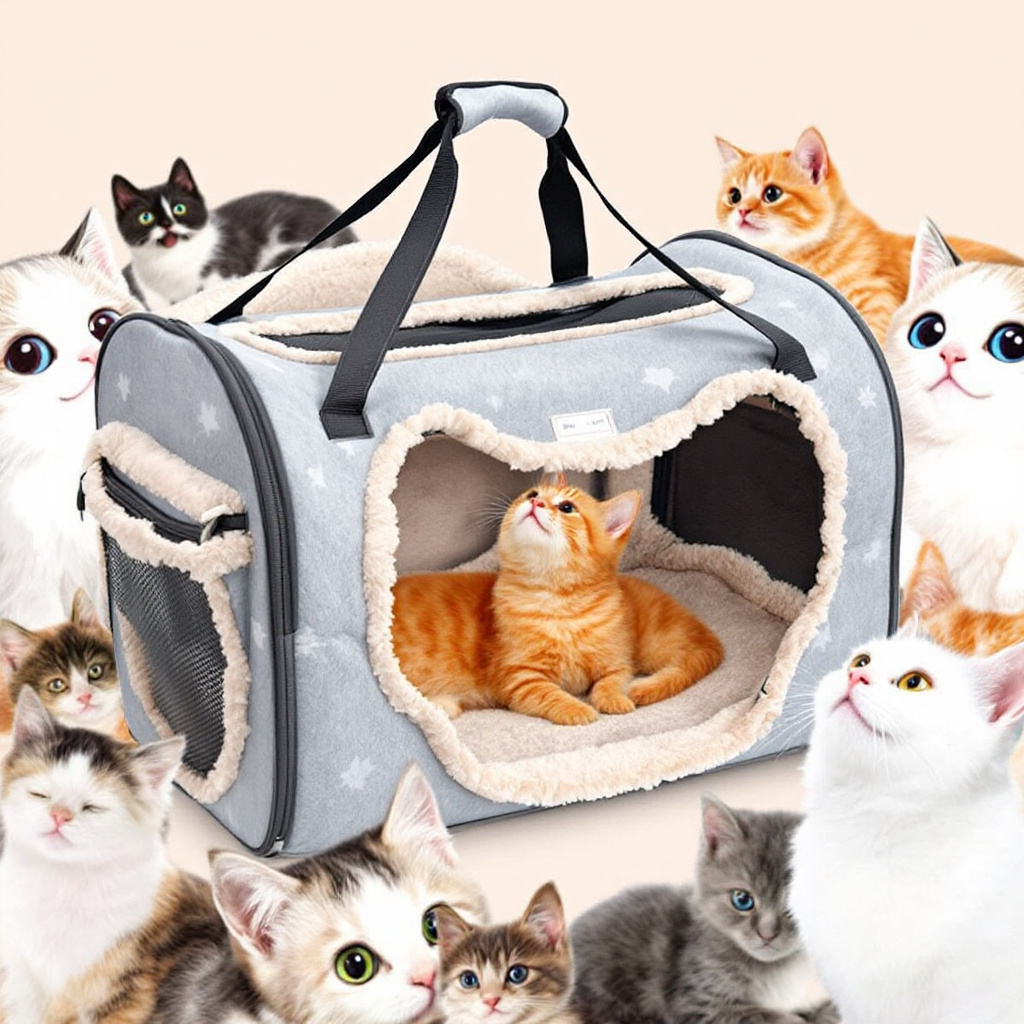
For large cats, such as Maine Coons, sturdy transport boxes made of reinforced plastic or metal are the best choice. The box should offer enough space for the cat to turn round and lie down. A non-slip mat or a soft cushion in the box can also increase comfort.
Can large pets be taken on public transport?
Yes, many public transport services allow large pets as long as certain rules are followed, such as wearing a muzzle or travelling in a suitable carrier. Make sure you check the guidelines of the relevant transport company in advance.
What documents are required for the air transport of large pets?
When transporting your pet by air, you will usually need a health certificate, proof of vaccinations and possibly confirmation from the airline that your pet is being transported. It is important to find out about the airline's specific requirements in good time and prepare all the necessary documents.
How do I get my large pet used to travelling?
Start with short journeys to get your large pet used to the car or transport in general. Reward calm behaviour with treats or cuddles. Over time, you can gradually increase the length of the journey. A familiar blanket or toy can also help to reduce stress.