Healthcare for pets on the move: Travelling safely with your furry friends.
Whether it’s a spontaneous weekend break or a long summer holiday – for many people, pets have long been more than just companions. They are members of the family who should always be by our side. But travelling with pets? There are a few things to bear in mind, especially when it comes to healthcare for pets on the move. Let’s dive into the world of travelling four-legged friends and see how we can ensure the best possible healthcare for them!
1. Preparation: A first-aid kit for your furry friends
Before the adventure begins, a well-stocked first-aid kit is essential. But what exactly should it contain? Well, that depends a bit on your four-legged friend, but some items are absolutely essential:
- Emergency medication: If your pet needs regular medication, make sure you have enough to last the whole trip – and ideally a little extra.
- First-aid kit: Cuts, bites and bruises happen more quickly than you might think. You should always have bandages, antiseptic and, if necessary, a pair of tweezers to hand.
- Travel sickness: Yes, pets can suffer from travel sickness too. Talk to your vet about suitable medication.
- Sedatives: Some animals, particularly cats and dogs, get stressed during a journey. Natural sedatives can work wonders in such cases.
2. Vaccinations: A vaccination for every adventure
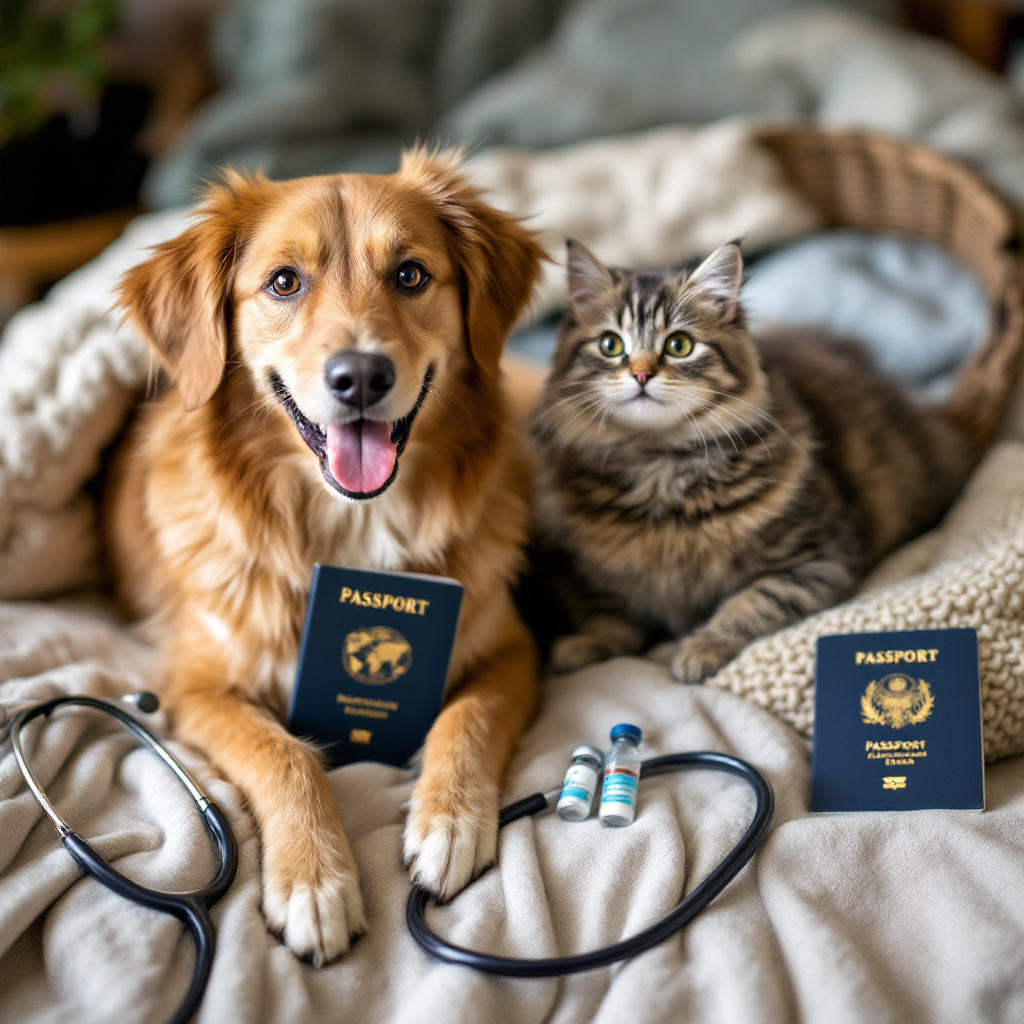
Vaccinations are an underrated yet essential part of healthcare for pets travelling abroad. Different countries require different proof of vaccination, whether for rabies or other specific diseases. But what matters even more than mere guidelines is protecting our beloved pets.
There are a few key vaccinations to bear in mind:
- Rabies: Most countries require proof of a valid rabies vaccination. Better safe than sorry!
- Nobivac combination vaccine: This protects against a wide range of diseases and should always be kept up to date.
Pro tip: Start making preparations at least six months before your planned trip to ensure that all your vaccinations are up to date.
3. Stress management: Keep calm, woof!
Travelling can be stressful for both animals and people. Unfamiliar surroundings, strange smells and the feeling of being in an unfamiliar place can trigger feelings of anxiety and restlessness. But how do we calm our four-legged adventurers?
- Double the comfort: Bring along something familiar, such as their favourite blanket or all their toys, to help them feel secure.
- Music therapy: Sounds such as classical music can have a calming effect on many pets.
- A peaceful journey: Avoid strange and loud noises and make sure your pet has regular breaks.
Thanks to these small but effective measures, the stress of travelling can be significantly reduced – and just like that, the holiday becomes much more relaxing for everyone involved!
4. Nutrition and hydration: Well-fed and ready to explore the world
Whether travelling by road or air, a sudden change in diet can lead to gastrointestinal problems. So how do we make sure everything runs smoothly?
- Consistency is key: try to feed your pets the same way you do at home, even when you’re out and about, so as not to upset their stomachs unnecessarily.
- Keep the water flowing: Make sure there is always plenty of water available, especially in warm climates or during long journeys.
Your pet will thank you for the care and that little bit of extra attention. After all, a full stomach is a happy stomach!
5. Staying healthy whilst travelling: routine measures for your trip
You’re almost ready to go, but how can you ensure that your pet’s healthcare isn’t interrupted whilst travelling?
- Check-ups: A quick visit to the vet before you leave to make sure everything is going to plan.
- Exercise: Try to stick to your usual walks and playtimes as much as possible. Routines help to reduce stress and promote well-being.
- Online helpers: Apps and smart devices for pets can be useful companions when travelling, helping you to keep track of feeding times or medical records, for example.
With these simple yet effective tips, you can be sure that you’re fully prepared to take your furry friends on a trip in good health and safety.
6. Closing thoughts: A very special kind of wanderlust
Taking care of your travelling pets’ health and wellbeing involves far more than simply complying with regulations and ticking boxes. It is an act of love, care and responsibility. Your furry companions cannot speak for themselves in many situations, but they rely on you to protect and keep them safe.
Whether it’s a dog, a cat or a rabbit – with the right preparation, travelling with pets isn’t just fun, it also creates unforgettable memories. So, pack the lead and off you go on an adventure!
FAQs on healthcare for pets travelling abroad
What do I need to bear in mind when travelling abroad with my dog?
Since 2004, dog owners crossing borders within the EU have been required to carry an EU pet passport. You can obtain this from your vet. Your dog must also be microchipped and have a valid rabies vaccination.
What do you need to bring a cat back from abroad?
A cat must be accompanied by an EU pet passport (for animals from the EU) or an official veterinary certificate (for animals from a non-EU country), on which the microchip number or tattoo is recorded. In addition, vaccination certificates and, where applicable, the results of the blood test (rabies antibody test) must be carried.
What vaccinations does a dog need for travelling abroad?
The pet passport is mandatory throughout the EU. When travelling within the European Union, the following rules generally apply: all dogs must be vaccinated against rabies and must be microchipped or tattooed. In addition, pets should also have received all other standard vaccinations before travelling.
How can I make my pet’s journey less stressful?
To make the journey less stressful for your pet, it is important to take steps to help them relax before you set off. This includes taking familiar items such as toys or blankets, considering the use of natural calming aids such as Bach flower remedies, and taking regular breaks to allow your pet to stretch their legs and get some fresh air.
Do I need any special documents to bring exotic pets into the country?
Yes, for exotic pets such as reptiles or birds, specific import regulations and documents may be required, depending on your destination. To avoid any problems upon arrival, please check with the relevant authorities in your destination country as early as possible to find out which certificates and permits are required.