
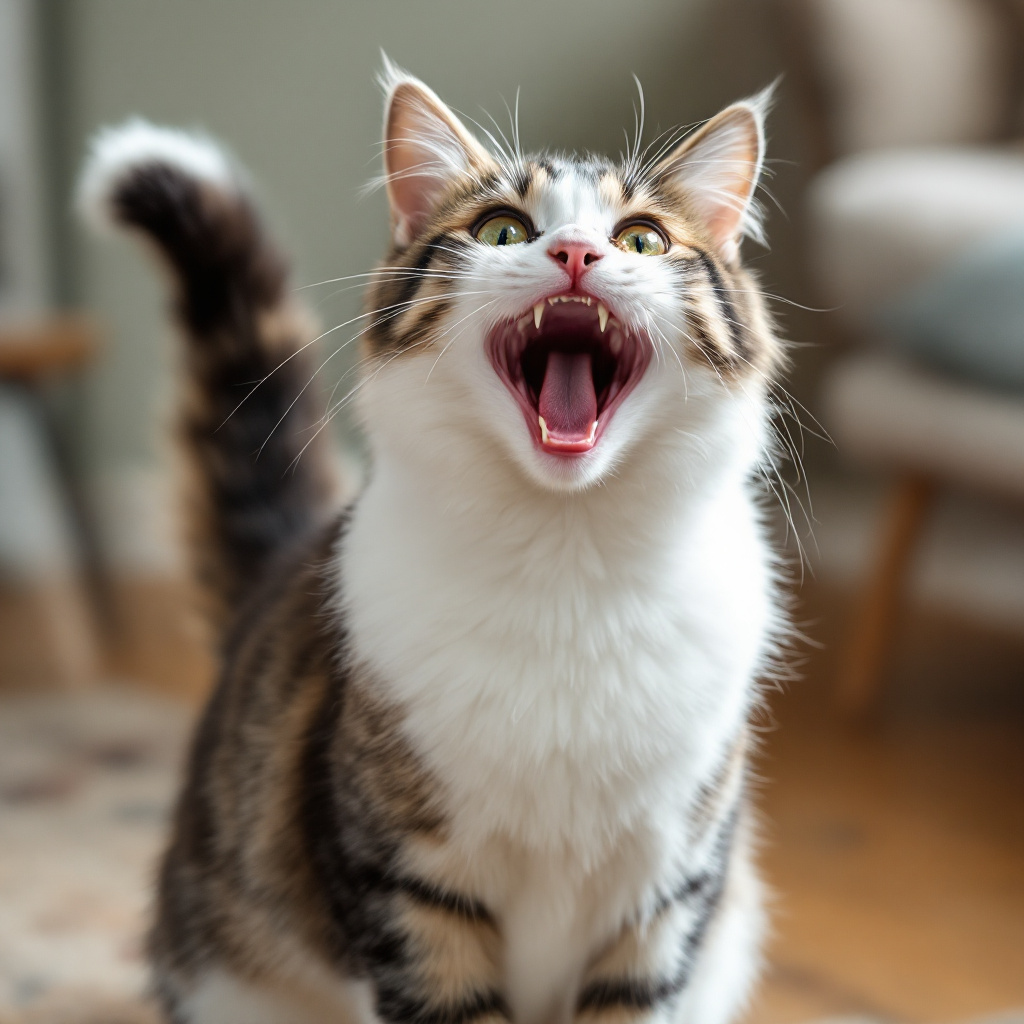
Your cat's body language: a window into their emotions and needs
Cats are mysterious creatures that often impress us with their graceful demeanour and unmistakable charisma. But what really goes on behind their fascinating eyes? Much of their communication is non-verbal, which is why it is so important to understand your cat's body language in order to strengthen the bond and offer them a cosy life.
How cats speak: An overview of their body language
You may think that the soft purring of your favourite tiger covers the whole range of its expressions. Fiddlesticks! Cats rely on a variety of cues to signal their moods and needs. These include not only facial expressions and noises, but also subtle gestures such as the position of their ears or the wagging of their tail.
The tail: a revealing instrument of communication
A cat's tail is like a living mood barometer.
- Erect: If you observe an erect tail, this often indicates a feeling of confidence or curiosity. Young cats in particular display this state when they are in the mood for play and adventure.
- Loosely swaying: A gently swaying tail usually signals contentment and relaxation. Your velvet paw feels safe and secure in its environment.
- Fast swinging or whipping: Caution is advised here. Rapidly moving the tail back and forth can indicate restlessness, dissatisfaction or even anger.
- Tucked tail: A tucked tail is a clear sign of fear or insecurity. At such moments, you should offer the cat a place to retreat to feel safe.
Ears and eyes: a mirror of the cat's mood
Have you ever realised how much your cat can communicate with just its ears and eyes? The ears are flexible like little antennae and can turn in any direction at lightning speed.
- Forward-facing ears: Interest and attention. If the ears are pointed forwards, the cat is usually curious and attentive.
- Sideways or laid out: This is often associated with stress or discomfort. Ears that lie sideways or flat against the head can indicate fear or threat.
- Slow blinks or winks: Consider this a sign of love. Blinking slowly indicates trust and contentment.
- Dilated pupils: Dilated eyes do not always evoke joy, but can also be caused by excitement or fear.
Cat language: meowing, hissing and much more
Apart from their body language, cats also make a variety of sounds that can give us an insight into their inner lives. Human friends are often familiar with meowing and purring, but hissing, growling and whirring also have their place in the cat vocabulary.
- Meowing: The universal language. Cats meow to indicate your attention, to greet their humans or simply to express a need (e.g. hunger).
- Purring: Although generally understood as a sign of contentment, purring can also have alternative relevance such as pain relief or self-healing.
- Snarling and growling: Clear signals of discomfort or aggression. If these noises occur, caution is advised.
Read the whole body: From the neck to the paws
Sometimes the cat's overall demeanour reveals more about its state of mind than a single characteristic. Look at the overall picture!
- Flat back and arched coat: This defensive posture is often adopted when threatened or frightened.
- Relaxed, smooth movements: A sign of calmness and comfort in the environment. Cats that feel at ease move gently and fluidly.
- Hiding: Often an indicator that the cat feels insecure or wants to be undisturbed.
Using your cat's body language to strengthen the bond
Ah, the magic of cat language! By understanding your cat's body language, you can not only deepen emotional connections, but also respond better to their needs. A well-read signal can be the key to a harmonious life together. This is how a curious kitten becomes a loyal companion who communicates with you beyond purring and meowing.
After this little excursion into the world of cats, let's remember that every kitty is a unique being. How we understand them and interact with them shows how loving and long-lasting our bond with them will be. So, be attentive, lovable and respect the non-verbal messages your feline companion sends you every day!
To summarise: your cat's body language is the key to a happy and caring relationship. Your attention and sensitivity to their signals are worth their weight in gold and create a harmonious living room environment in which both humans and animals can feel at ease!
FAQs
How does a cat show affection?
If the furry friend rubs its head against you or kicks milk on your body, the cat is showing that it likes and loves you. This behaviour is a legacy from her childhood, when she kicked milk at her mother to stimulate the flow of milk.
Why does the cat lift its bum when stroked?
Cats are no different. As the odours at the anal glands are particularly intense, cats stretch out their rear end towards us so that we can greet them in a befitting manner. Raising their bum is therefore a sign of trust and a cross-border act of feline friendship.
How does a cat show joy?
A cat shows its happiness in various ways. For example, it purrs loudly, rubs itself against people or objects, wags its tail and generally shows relaxed and contented body language. Sometimes it also does a cat paw march with its front paws, a sign of well-being.
What does it mean when my cat rattles its teeth?
The chattering of teeth in cats is usually a sign of excited anticipation of the hunt. When cats observe birds or insects, they can anticipate them with a characteristic clicking of their teeth. It can also express frustration as they are unable to reach their prey.
Why does my cat meow all the time?
Excessive meowing can indicate several things. Your cat could be seeking attention, hungry or uncomfortable. If the meowing seems unusual or worrying, a visit to the vet may be advisable to rule out any health problems.