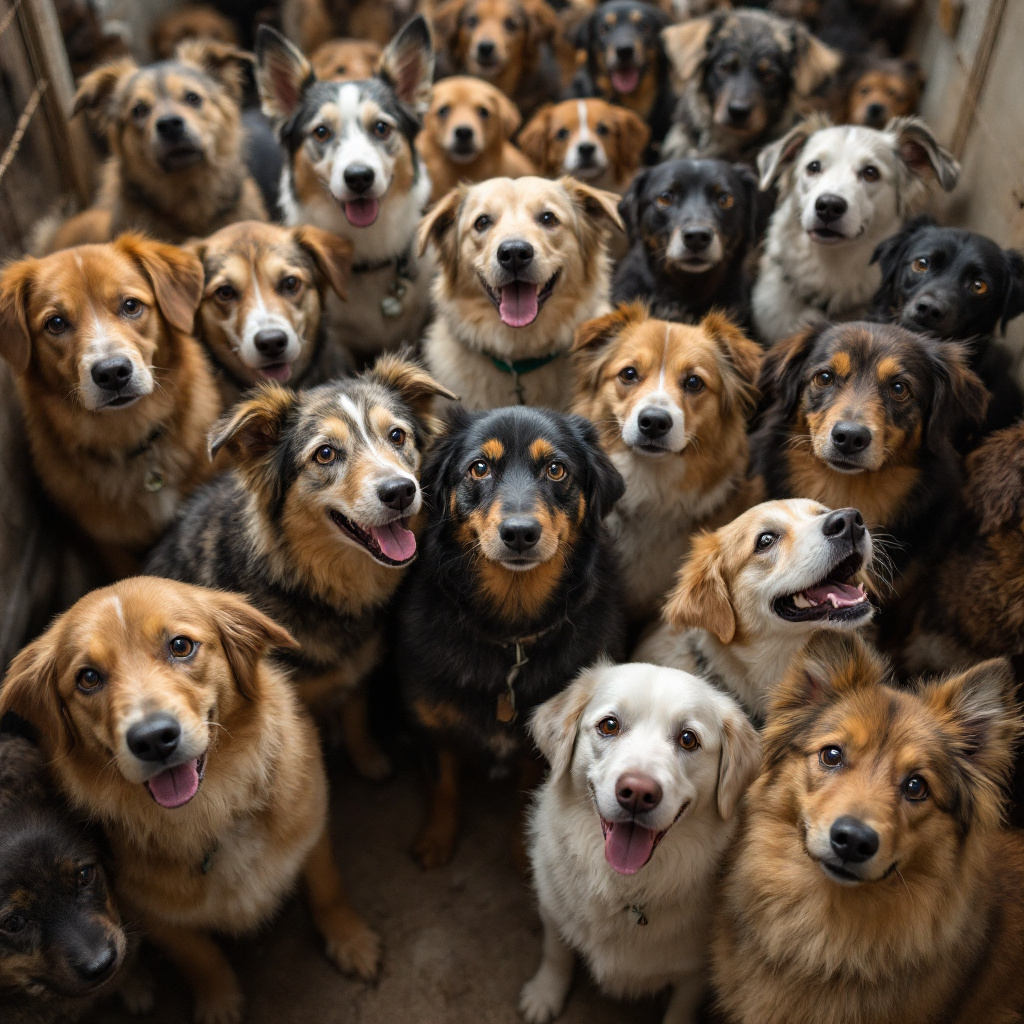

The fascinating history of dog tax: from the beginnings to the present day
If you've ever had a loyal four-legged friend by your side, then you know that these furry friends are more than just pets. They are family members who bring unconditional love and joy. But did you know that the dear canine tax has been a loyal companion to dog owners for centuries? In this blog article, we take a look at the fascinating history of the Dog tax, which has left its mark over the centuries and has developed differently in many countries.
The origins of the dog tax
The history of dog tax goes back a long way. In fact, the early practice of taxing dogs dates back to the Middle Ages. Back then, no one understood better than the ruling houses that dogs were more than just loyal companions; they were a symbol of prosperity and security. But why did rigid tax laws come about?
The first historical evidence of the dog tax appeared in the 15th century. It is reported that taxes were levied on dogs in towns and municipalities in order to regulate the number of uncontrollably growing dogs and channel the revenue into the public coffers. Yes, it turned out that there was a clever strategy behind this tax!
Tax through the ages
The dog tax in the 19th century
The industrial revolution brought with it many changes, and the dog tax was not left untouched. In 1809, Saxony-Coburg introduced the dog tax - a true pioneer in Germany. The original reason was to curb epidemics and control the number of dogs. With this measure, it was hoped that relations with the often free-roaming four-legged friends in the alleyways of the old town could be better managed.
Over the course of the 19th century, other German cities followed suit and began to levy similar taxes. Urban areas in particular introduced these measures to regulate both animal and human hygiene problems.
The development of dog tax in the 20th century
You might think that with the advance of modernity, people have left the dog tax behind. Far from it! Although its form changed in the 20th century, it continued to find its way into the regulations of many countries. But why was the tax retained?
Peacetime after the world wars
After the two world wars, a number of countries experienced major economic challenges. The dog tax became a small, additional source of income for hard-pressed local authorities. Would you believe it? The taxes were mainly used to cover the costs of cleaning and maintaining public spaces where dogs often left their tracks.
Interestingly, the tax has also led to a change in dog ownership. People have become more conscious about getting dogs, partly thanks to increased tax costs.
Regional differences in dog tax rates worldwide
Over the years, dog tax has not only changed within a country, but also on an international level. It is exciting to look at the global differences.
- Germany: Germany continues to levy different tax rates from region to region. The amount varies greatly depending on the federal state and city.
- Switzerland: Each municipality decides on the amount of dog tax itself, which can lead to hugely different rates.
- Great Britain: It is interesting to note that dog tax was abolished in England in 1987. However, even today dog owners cannot sit back and relax completely, as numerous rules ensure that cleanliness and order are maintained.
These examples show that the dog tax has very different forms and functions around the world. However, the main aim of managing the number of pets in urban areas seems to be consistent.
Why does the dog tax still exist today?
Now we ask ourselves why, in this day and age when life seems to have become so much more complicated, a tax on something as simple and joyful as a dog is still relevant at all.
Regulation and control
The dog tax is still used today as an instrument to regulate the keeping of dogs and minimise problems such as overpopulation, neglect or stray dog problems. Local authorities use the revenue to support animal shelters, maintain dog parks and finance cleanliness measures.
Promoting responsible dog ownership
By levying a tax, the municipalities are endeavouring to increase the responsibility of dog owners. They should think carefully about whether they can and want to get a dog - including all the associated costs.
A look into the future of dog tax
There's no doubt about it: the history of dog tax reflects the relationship between humans and animals - for better or for worse. But as we look to the future, the question arises as to how these centuries-old practices will evolve.
Sustainable practices
At a time when sustainability and environmental protection are increasingly taking centre stage, future dog taxes could focus even more on promoting environmentally conscious practices. One might think that the revenue from the dog tax could be invested in the development of environmentally friendly parks and open spaces. What a thought!
Technological developments
Who knows, perhaps in the future technology will play an important role in the management and control of dog ownership. Concepts such as electronic tax tags and improved access to information about regulation changes could make the whole process easier and more accessible for thousands of dog owners.
Whatever form the dog tax takes, one thing is certain: it will remain part of the complex relationship between humans and dogs. And in the midst of all this, it is clear that the history of dog tax is a truly fascinating narrative through politics, society and time. Until next time, stay true to yourself and your four-legged friend - and, of course, to your beloved dog tax!
FAQs on dog tax
How did the dog tax come about?
Around the year 1810, the dog tax was declared a "luxury tax" in Prussia. The idea behind this tax was as follows: anyone who was able to keep a dog on the side should also be able to pay a tax to the state for this luxury.
Why is there a dog tax at all?
In addition to its revenue-raising purpose, the dog tax also serves the regulatory purpose of limiting the number of dogs, especially fighting dogs, in the municipal area.
How is the dog tax justified?
The dog tax has a long tradition in Germany. It was introduced back in the 19th century on the grounds that dog ownership caused additional costs for local authorities.
Who determines the amount of dog tax?
The amount of dog tax in Germany is determined by the individual municipalities, resulting in a variety of different rates across the country. The differences can be considerable, depending on regional policies and financial requirements.
Can the dog tax be abolished?
Technically, municipalities can decide to abolish the dog tax, but in practice this is rare. The tax is often an important source of income and also fulfils regulatory purposes, such as limiting dog ownership in urban areas.